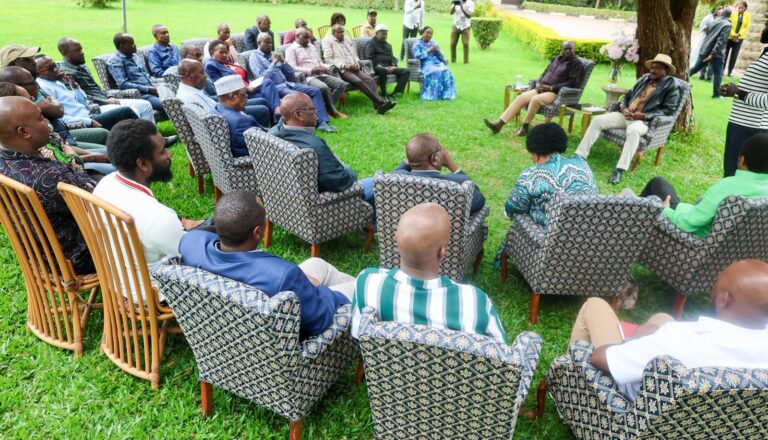
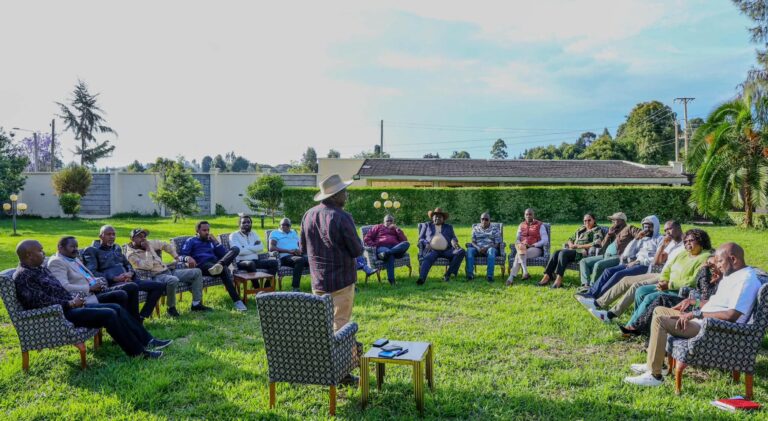
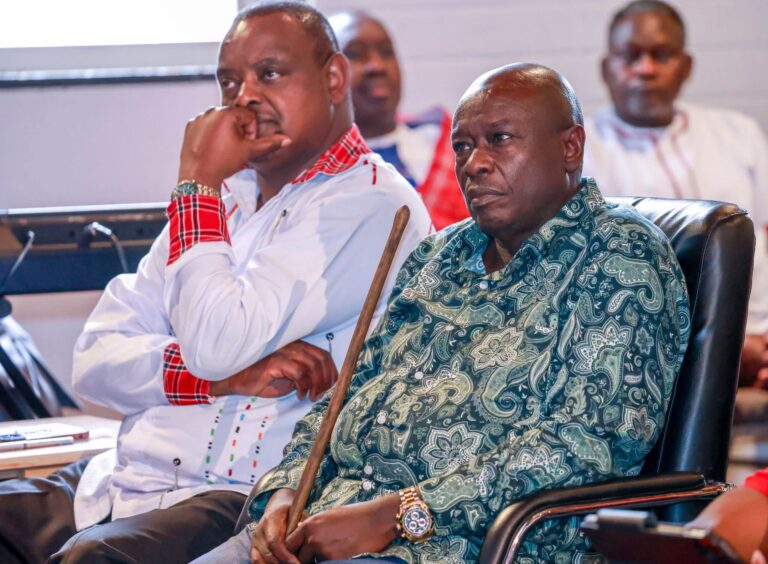
The former Deputy President’s claim to Mt Kenya’s voting bloc faces a difficult question: how does a politically divided region translate into seven million votes under one leader?
Rigathi Gachagua’s repeated invocation of seven million Mt Kenya votes raises a fundamental question about the region’s political arithmetic. Does he assume that an entire electorate will automatically follow his lead and that the region’s voters are his to command at will?
Mt Kenya is not a single political constituency, and its millions of voters do not surrender their individual choices to any politician simply because he claims regional leadership.
Gachagua hails from Nyeri County, but the political geography of Mt Kenya extends far beyond his home county. Kiambu, with its much larger electorate, has its own political interests and competing centres of influence. Meru, Murang’a, Kirinyaga, Embu, Nyandarua, Laikipia and Tharaka-Nithi likewise have distinct political calculations.
How much of that vote any single leader can realistically claim.
In Kiambu, the political influence of local leaders and the county’s competing interests complicate any assumption that its electorate will automatically rally behind Gachagua. In Meru, Deputy President Kithure Kindiki has his own political base, while local leaders and voters have their own priorities.
Neither county’s electorate can simply be added to Gachagua’s tally before voters have made their choices.
The historical record also invites scrutiny. In the 2017 presidential election, President Uhuru Kenyatta secured approximately 8.2 million votes nationally, including a substantial share from Mt Kenya. That performance came when the region’s political mobilisation was organised around his re-election bid.
Today’s political environment is different. The region is navigating competing loyalties, party affiliations and rival claims to leadership. Any projection of seven million votes must therefore explain how that fragmented political landscape would translate into a single presidential tally.
Which counties would deliver the votes? What proportion of registered voters would turn out? How many would support Gachagua, and how many would back rival candidates?
These are the arithmetic behind a presidential campaign.
Gachagua may have a substantial following and may seek to position himself as a leading voice of Mt Kenya politics. But claiming regional leadership and demonstrating the ability to mobilise a defined number of votes are two different propositions.
The mountain’s political history offers a recurring lesson: regional identity can shape electoral behaviour, but it does not erase local interests, personal choices or competition among leaders.
Seven million votes cannot be established through repetition. They must ultimately be demonstrated at the ballot.
Is seven million a measurable electoral target backed by a clear political strategy, or an assumed bloc whose individual voters have yet to make their choice?
Mt Kenya’s electorate is large enough to influence the national contest. But its votes belong to the voters themselves, not to any politician claiming to speak for the region.
About the Author