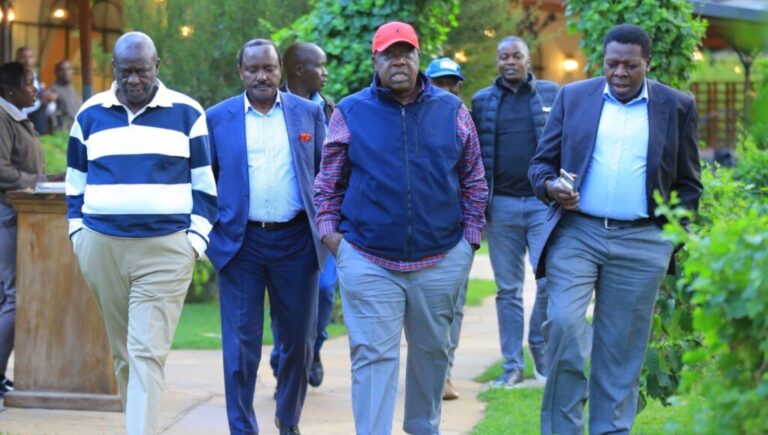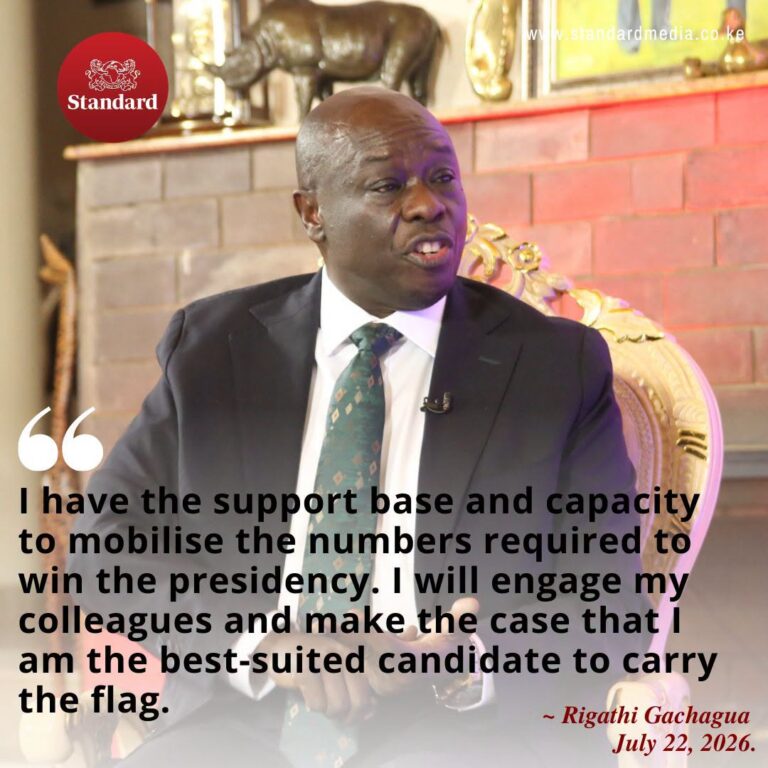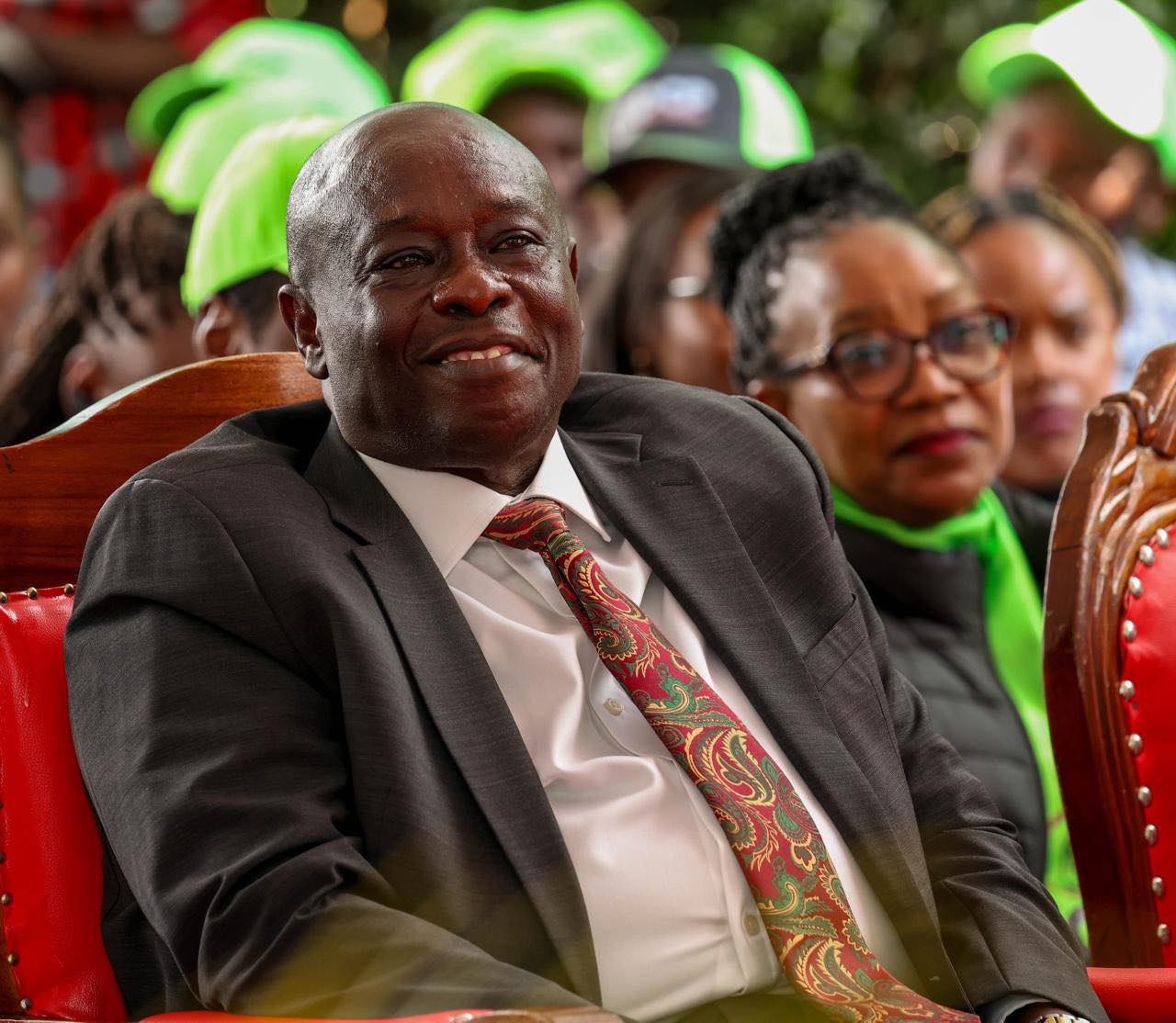
The opposition’s quest to unite ahead of the 2027 General Election is facing a major test, with former Deputy President Rigathi Gachagua pushing for an early announcement of its presidential flagbearer. The move threatens to deepen divisions among opposition leaders and complicate efforts to build a formidable coalition against President William Ruto.
Gachagua’s position has put him at odds with Wiper Party leader Kalonzo Musyoka, who is concerned that naming a candidate too early could trigger defections, alienate potential coalition partners and undermine ongoing negotiations.
The disagreement exposes one of the opposition’s biggest weaknesses: competing presidential ambitions among leaders who must work together if they hope to defeat the incumbent.
At the centre of the dispute is whether the coalition should first agree on power-sharing arrangements, the distribution of political positions and a credible candidate-selection process before announcing its flagbearer.
Gachagua’s insistence on an early decision risks forcing leaders to take sides before these issues are resolved. Those who feel sidelined could walk away, while others may resist a candidate they believe was imposed on them.
This is where Gachagua’s role becomes politically significant. Ruto’s camp stands to benefit from an opposition that cannot agree on its leadership. A divided coalition would struggle to coordinate its campaign, consolidate support across regions and present a credible alternative government.
Gachagua’s actions are therefore playing into a political strategy that weakens the opposition from within. His push for an early flagbearer announcement risks creating precisely the divisions that would make a united challenge against Ruto difficult.
Rather than allowing negotiations to mature and giving all interested parties confidence in the selection process, the early-declaration push threatens to turn the presidential ticket into a contest for political survival.
Kalonzo’s caution reflects the delicate nature of coalition building. Opposition unity requires compromise, trust and an agreed framework for managing competing ambitions. It cannot be achieved simply by announcing a candidate and expecting everyone else to fall in line.
Other opposition leaders have their own political constituencies, party interests and presidential ambitions. Without consensus, the flagbearer question could trigger rival alliances and leave the opposition weaker than it is today.
The challenges extend beyond choosing a candidate. The coalition must also agree on a common national agenda, campaign coordination and the sharing of responsibilities in a possible government.
Meanwhile, every public disagreement gives the ruling camp an opportunity to portray the opposition as disorganised and incapable of governing together.
As the 2027 election approaches, the opposition faces a critical choice: manage its internal differences through negotiations or allow the flagbearer contest to destroy its unity before the campaign even begins.
If the objective is to make opposition unity impossible, an early flagbearer declaration that alienates potential partners would be a highly effective way of achieving it. The greatest beneficiary would be Ruto, whose re-election prospects improve if his opponents spend their time fighting one another instead of building a winning coalition.
About the Author