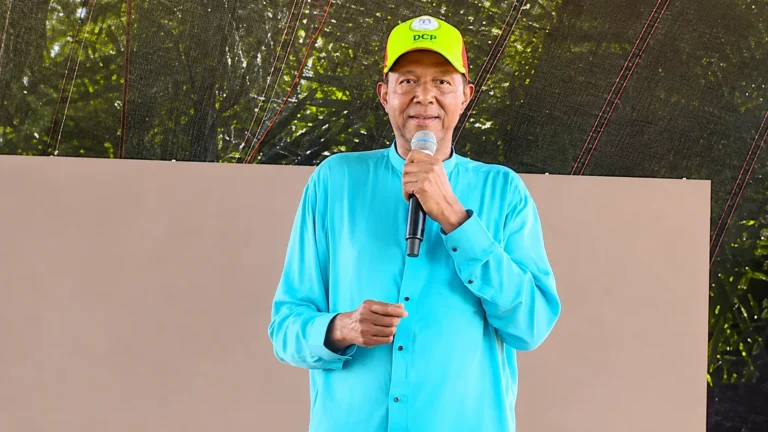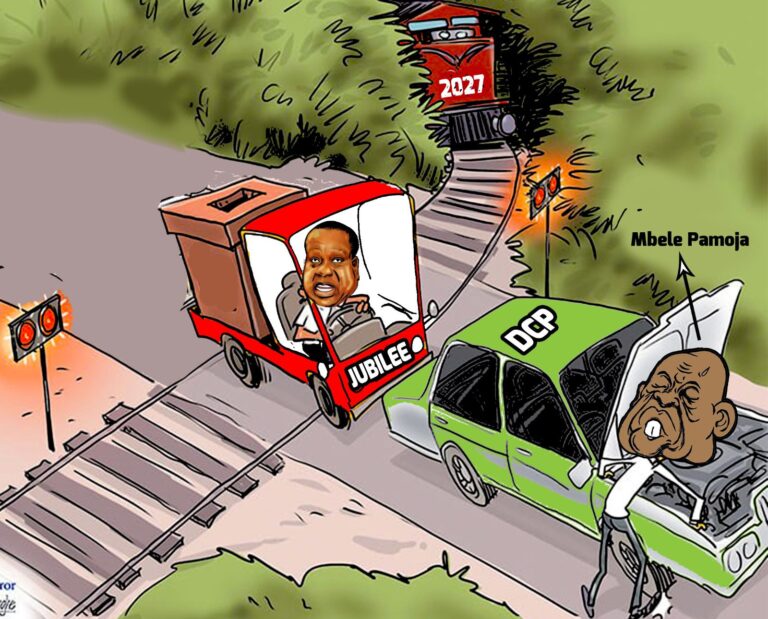
Rigathi Gachagua has perfected a dangerous political method: announce the crisis before it happens, name the villains in advance, and position himself as the man under siege. When the predicted disaster fails to materialise, the narrative simply shifts to the next threat.
Last week it was Emurua Dikirr. Gachagua wrote a detailed letter to Inspector-General Douglas Kanja warning of planned attacks by goons and plain-clothes officers allegedly backed by senior Interior officials. He framed the visit as high-risk, demanded public assurances, and invited Kenyans to see any incident as proof that the state had targeted him. The visit took place. The scripted catastrophe did not. The sympathy machine was left running without fuel.
Today the script has moved to the Independent Electoral and Boundaries Commission. Gachagua now claims that a system is being procured or designed — involving the Mining Cabinet Secretary and an IEBC official — that will be used to steal the 2027 election. He says he is still verifying the details and will reveal more later. In the same breath he has described the technology tender as tailor made for a firm with a record of failure.
These are serious allegations. They touch the integrity of the vote, the independence of the electoral body, and public confidence in the next general election. They also arrive without the accompanying evidence that would allow institutions to investigate properly. What the public receives is the accusation, the names, and the promise of fuller disclosure later.
Kenya has seen this movie before. Unsubstantiated claims of impending electoral theft, repeated often enough and loudly enough, create an atmosphere of suspicion that can outlast any single election cycle. When leaders with large followings plant the idea that the game is already fixed, they lower the threshold for post-election rejection of results.
The Constitution provides clear pathways for challenging electoral processes and outcomes — through the courts, through parliamentary oversight, through the procurement review mechanisms already in use. Those channels exist precisely so that the country does not have to live under permanent pre-election tension.
Gachagua is entitled to scrutinise IEBC procurement and to demand transparency. He is not entitled to convert every unresolved tender or every security concern into a national emergency designed to keep him at the centre of the news cycle.
The pattern is consistent: write the letter that anticipates violence, issue the claim that anticipates theft, and then occupy the moral high ground of the man who warned the country.
A serious opposition leader prepares his case, tables evidence where it can be tested, and uses the institutions the Constitution provides. A political operator keeps the country on edge because the edge is where the headlines and the mobilisation live. Kenya has paid a high price in the past for politicians who preferred the latter. It cannot afford to do so again.
About the Author