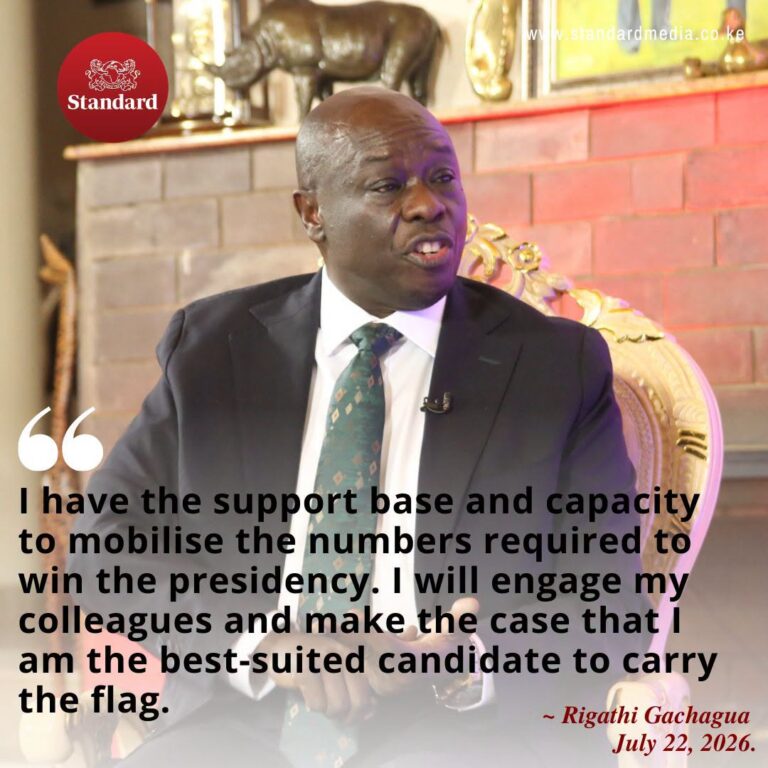
If you want to annoy supporters of DCP Party leader Rigathi Gachagua, don’t insult him. Don’t criticize him. Don’t even mention his latest political rally.
Just tell them this simple sentence:
“Gachagua is the best person to face Ruto in 2027.”
Immediately, temperatures rise. Blood pressure readings become a national security issue. Some start typing essays longer than a university thesis explaining why Gachagua should not be president.
And that raises a very interesting question: if you don’t want him to be president, why are you following him so passionately?
Many of his supporters insist they only support him because he is “speaking for the people.” Yet the moment you suggest he should occupy the highest office in the land, they quickly begin listing reasons why that would be a terrible idea.
Some say he is too divisive. Others say he focuses too much on ethnic politics. Some argue that he spends more time identifying enemies than presenting solutions to economic challenges. A few quietly admit that his confrontational style may excite political rallies but may not be suitable for leading a diverse nation of more than 50 million people.
In other words, they often present the strongest case against his presidency themselves.
The contradiction is fascinating. Imagine supporting a football coach every weekend but refusing to let him manage your national team. At some point, people will naturally ask questions.
If Gachagua is the right leader for Kenya, then his supporters should proudly say so. If they believe he is not fit to be president because of his divisive rhetoric, constant political battles, and tendency to turn every issue into an ethnic contest, then they should explain why they continue to market him as the country’s future hope.
Until then, one statement will continue causing panic in certain political circles:
“Gachagua for President 2027.”
For some of his own supporters, those four words are apparently the most offensive political slogan in Kenya.
About the Author