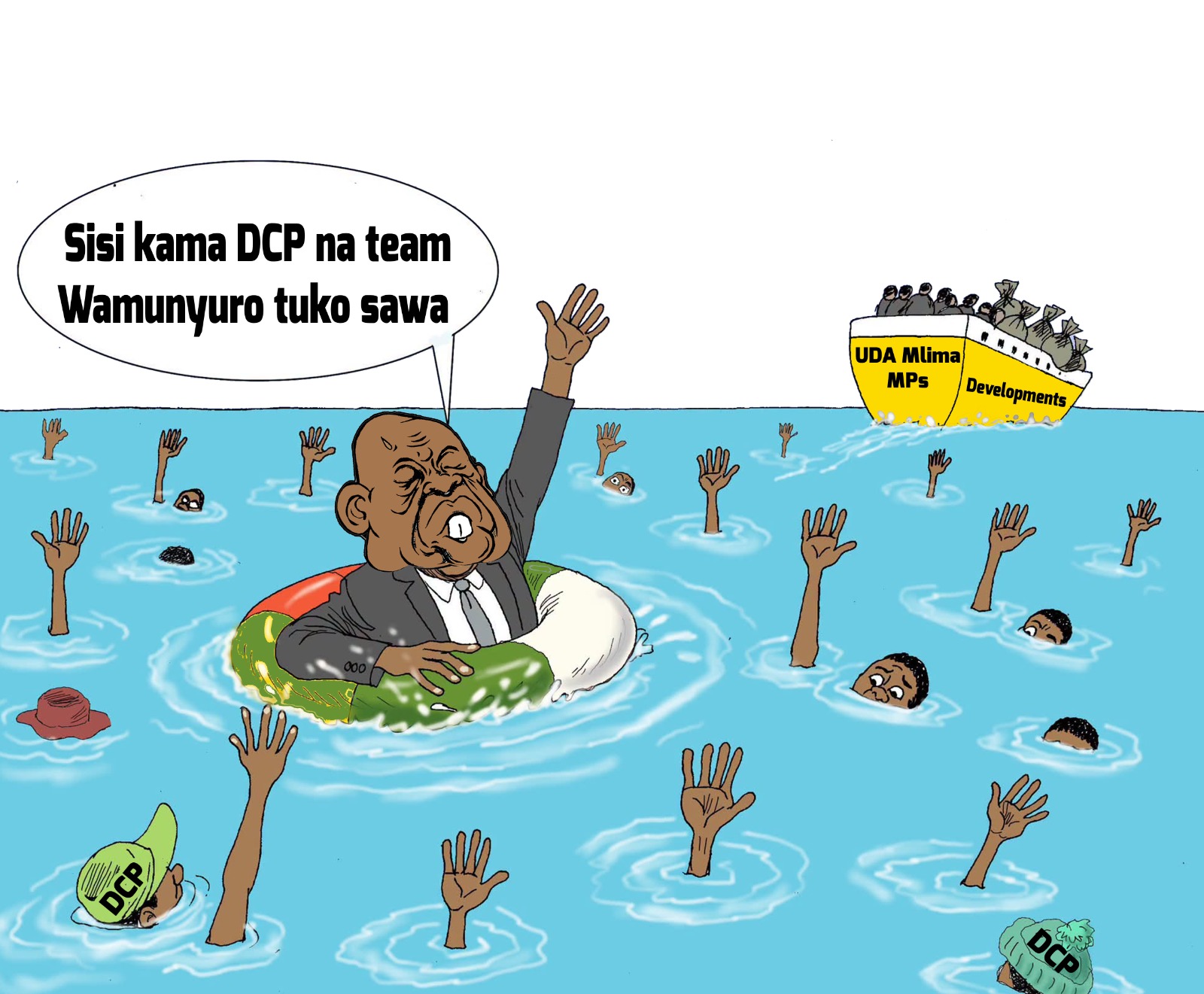
Politics is at its best when it inspires hope. At its worst, it feeds on grievance, suspicion and the dangerous belief that neighbours must become adversaries before leaders can become victors. That is the unsettling question hanging over the Ol Kalou by-election.
DCP Party Leader Rigathi Gachagua has increasingly anchored his political appeal in the language of exclusion and persecution, casting himself and his allies as victims of a hostile political establishment. There is, of course, nothing wrong with opposition politics challenging those in power. Holding governments to account is the lifeblood of any democracy. But opposition ceases to be constructive when it depends less on presenting solutions and more on convincing supporters that politics is an existential struggle between “us” and “them.”
In my view, that is the direction Gachagua’s politics has taken. Rather than elevating debate around jobs, agriculture, enterprise and the cost of living, his rhetoric has too often framed political competition through the lens of identity, loyalty and grievance. It is a strategy that may energise a political base, but it also risks deepening divisions within communities that must continue living together long after the campaign ends.
Reports of tension and isolated incidents of violence during the Ol Kalou campaign should concern every Kenyan. Responsibility for any unlawful acts must ultimately be determined by the relevant authorities. Yet one principle remains beyond dispute: leaders carry a special responsibility to calm emotions, not inflame them. Their words shape the tone of political competition and can either reinforce peace or deepen mistrust.
Ol Kalou deserves a contest of ideas, not identities. Its voters deserve leaders who speak about economic opportunity, better public services and the future of young people—not a campaign dominated by grievance and perpetual confrontation.
If Gachagua aspires to lead Kenya again, he should demonstrate that his politics can unite rather than polarise. Lasting leadership is not measured by the loudest applause at political rallies, but by the ability to build bridges across differences and persuade without dividing.
Kenya has paid too high a price for divisive politics to repeat its mistakes. Elections are temporary. Communities are permanent. The leaders worthy of public trust are those who leave the country more united than they found it.
About the Author