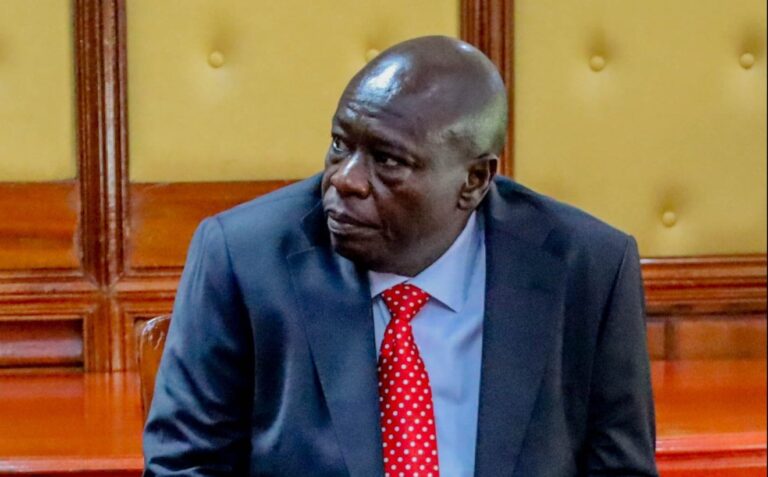
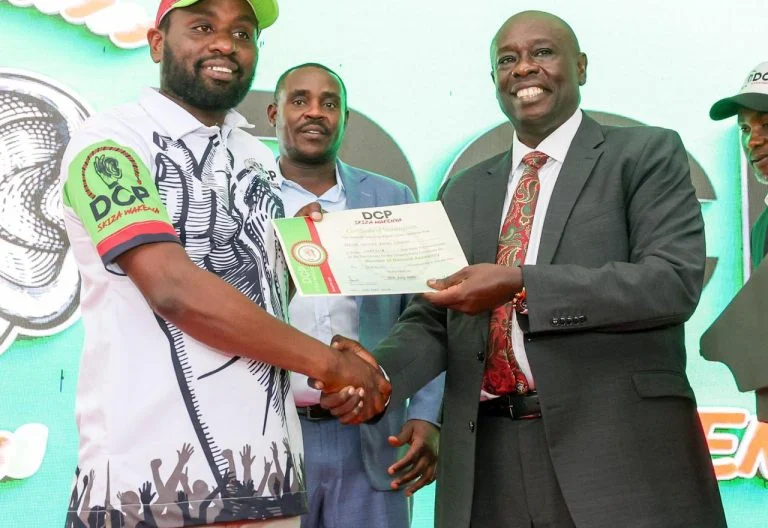
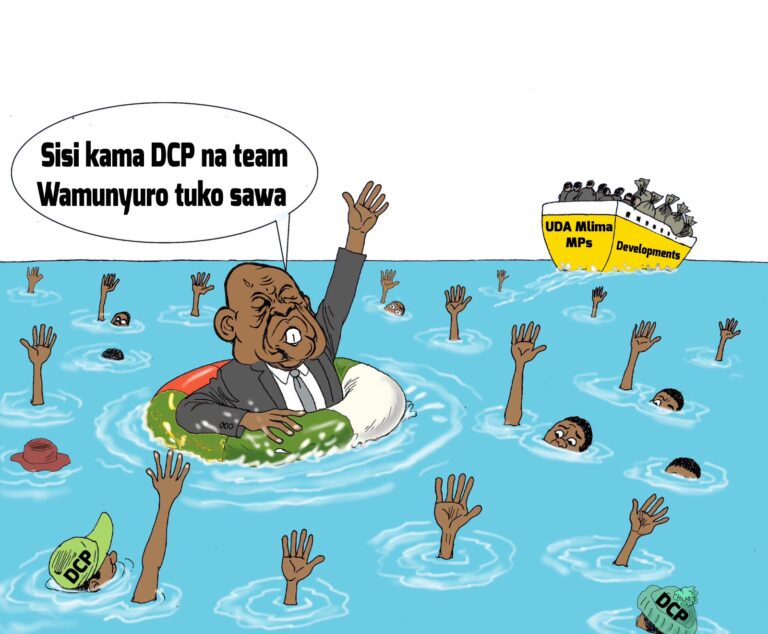
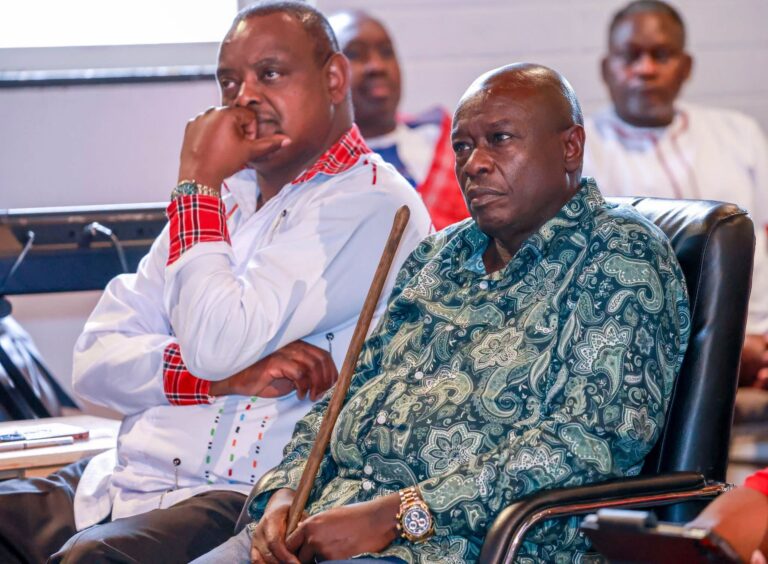
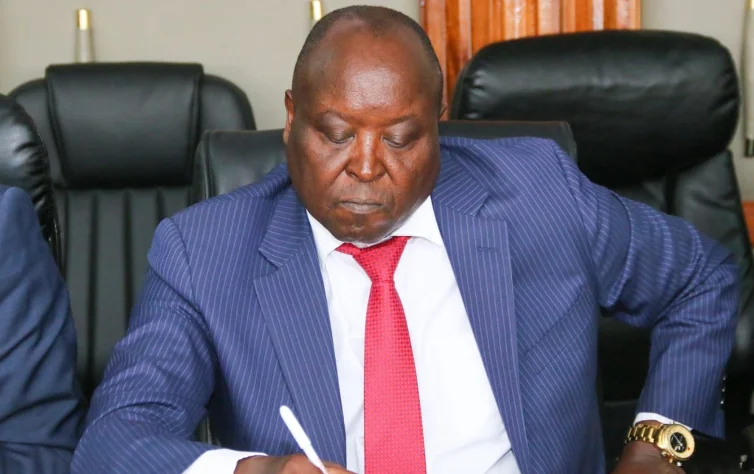
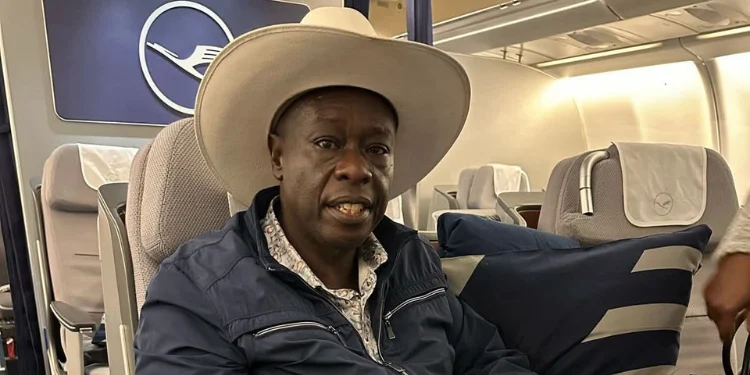
Once hailed as a “truthful man,” former Deputy President Rigathi Gachagua now finds himself mired in controversy, as mounting accusations challenge his longstanding claim of bankrolling President William Ruto’s 2022 campaign.
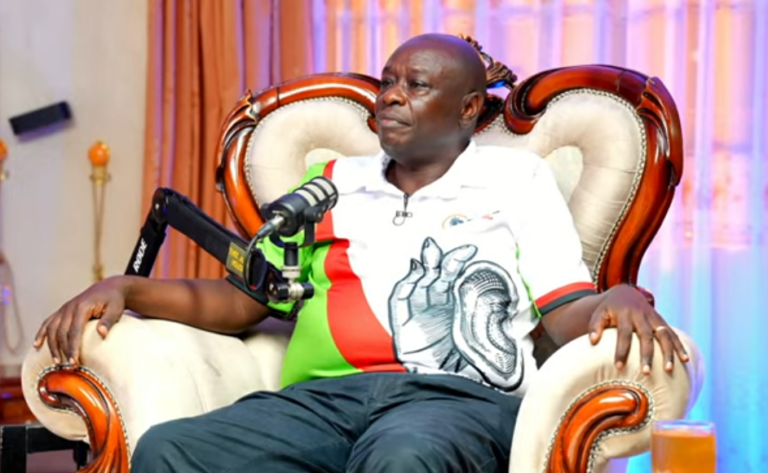
A bombshell podcast by Kericho Senator Aaron Cheruiyot has reignited the political firestorm, with the senator branding Gachagua a “liar and tribalist,” accusing him of consistently evading campaign contributions under the guise of frozen bank accounts.
Cheruiyot’s remarks, aired on July 24, 2025, directly contradict Gachagua’s narrative of being a key financial pillar in Ruto’s presidential bid. “Rigathi didn’t contribute a single cent,” Cheruiyot declared, revealing that Gachagua routinely cited account freezes—allegedly orchestrated by then-President Uhuru Kenyatta—as an excuse whenever he was asked to fund campaign operations.
“Mimi ningelipa lakini Uhuru alifunga account,” Cheruiyot recalled Gachagua saying when pressed to settle bills. “Even after he was named running mate, he never spent a single shilling. He would wake up, find a chopper and campaign funds already arranged by Ruto. His only job was to show up, speak, and return home. He didn’t even know where the money came from.”
Gachagua’s self-portrayal as a campaign financier has become central to his post-impeachment rebrand—particularly in the Mt. Kenya region, where he often paints himself as a betrayed benefactor who “made Ruto president.” But behind the scenes, a different story emerges.
Sources within the Kenya Kwanza alliance suggest Gachagua was chosen as Ruto’s running mate not for his financial muscle, but as a strategic move to consolidate the Kikuyu vote. Internal records reveal that in a May 2022 meeting of Central Kenya MPs, only five supported Gachagua’s nomination—while 27 backed Tharaka Nithi Senator Kithure Kindiki.
The term “truthful liar,” now trending across social media, reflects growing public frustration with Gachagua’s pattern of contradiction. Since his impeachment in October 2024—on charges including abuse of office and incitement of ethnic hatred—he has attempted to recast himself as a political martyr. His repeated claims of loyalty and sacrifice echo other exaggerated assertions, such as being the sole defender of Mt. Kenya’s interests, despite widespread criticism that he has prioritized tribal division over national unity.
In the end, Gachagua may have to confront a sobering reality: the very public he claims to represent has begun to turn away. His “truthful” persona is unraveling—and the ground he insists he listens to is no longer listening back.
About the Author