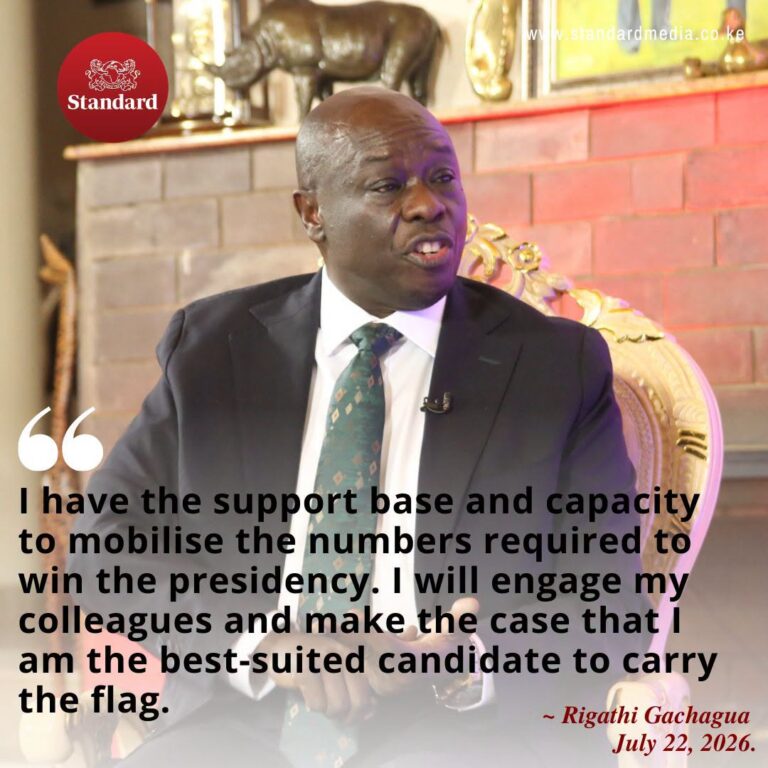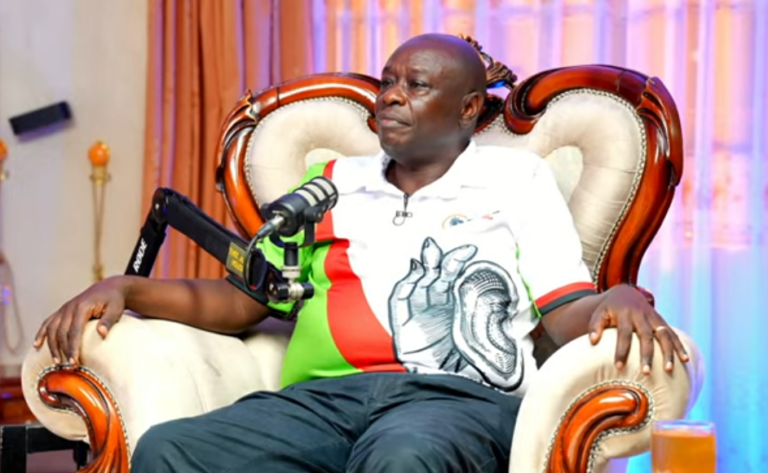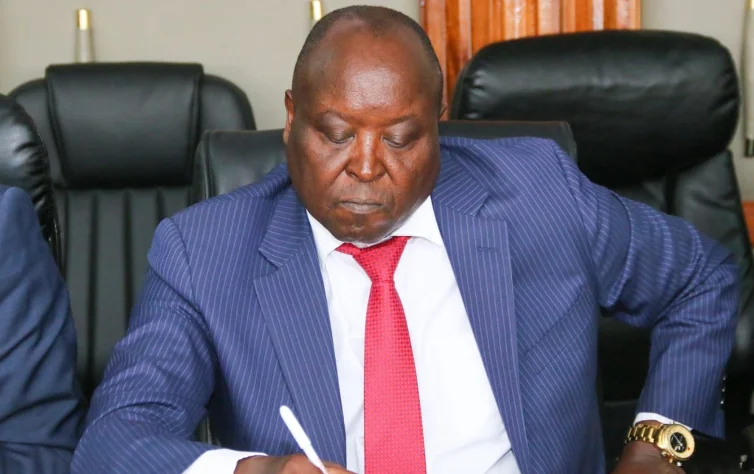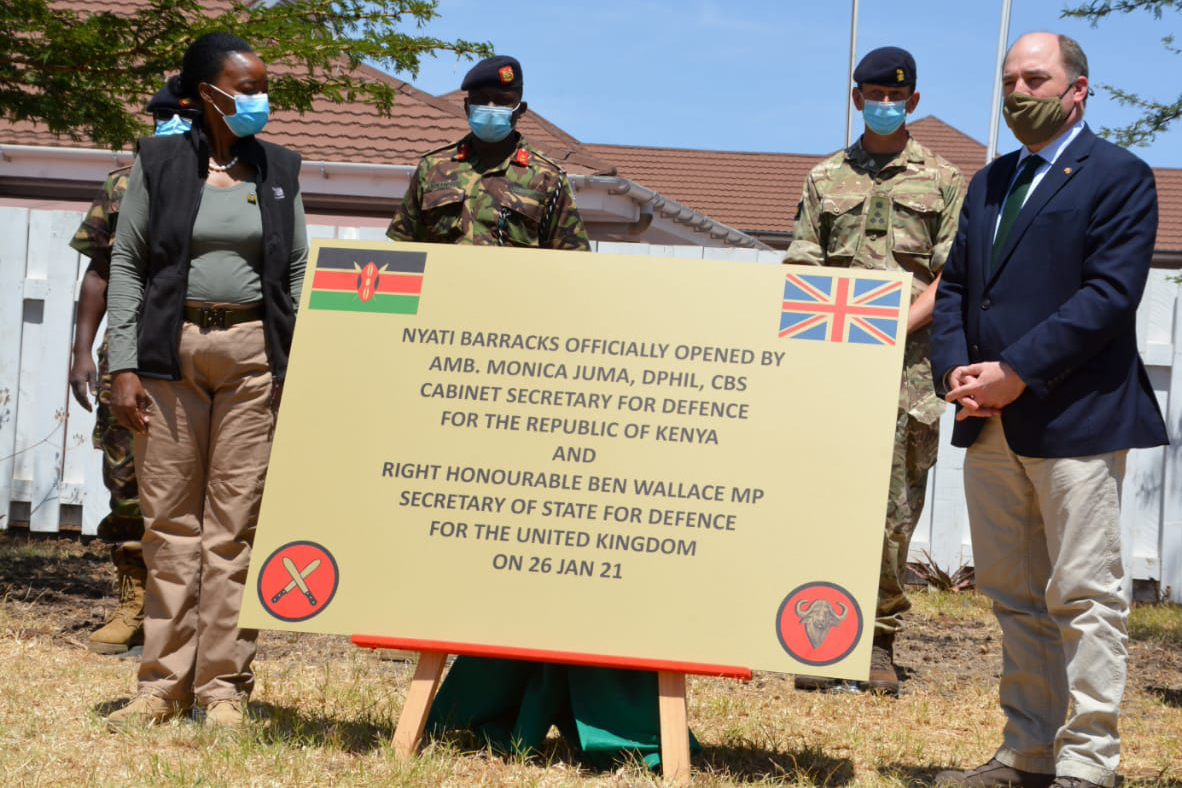
Rigathi Gachagua stood in a church in Meru on Sunday and decided the Lord’s house was the perfect venue for another wild corruption story. According to him, the Defence and Foreign Relations Committee, led by Nelson Koech, walked up to the British Army Training Unit Kenya and demanded KSh 3 billion.
One billion for the MPs, two billion for Ruto’s 2027 campaign. The British, shocked by the receipt-less demand, packed up and moved part of their training to Tanzania. Nanyuki, he warned, will die. That is the story. Delivered with the usual dramatic flair, the usual pointing of fingers, and the usual complete absence of a single piece of evidence.
Let us deal with the facts, not the theatre.
Parliament does not negotiate defence agreements. The Constitution and the Treaty Making and Ratification Act are clear: that is the work of the Executive the Ministry of Foreign Affairs and the Ministry of Defence. Parliamentary committees scrutinise, investigate, and recommend. They do not sit across the table and name their price. Nelson Koech has already stated this plainly.
His committee spent two years looking into BATUK and tabled a report in November 2025 recommending stronger accountability measures, including Kenyan courts handling serious offences by visiting troops. That is the record. Not a 3-billion shakedown.
Yet Rigathi speaks as if he was in the room, heard the demand, and watched the British walk away in disgust. No minutes. No letter. No recording. No named British official. Just “he told the whites.” In a church. On a Sunday.
This is not defence of BATUK. This is the weaponisation of BATUK. The same man who spent years in government now discovers that every problem in the country is a Ruto bribery scheme the moment he is outside.
Nanyuki’s economy, jobs for hundreds of locals, joint training, counter-terrorism cooperation all of it reduced to a political scare story so that Mt Kenya can be told once again that only Rigathi stands between them and ruin.
The real reasons the UK cancelled a planned September exercise are on the public record: unresolved questions of legal jurisdiction, accountability for serious crimes (including the long-running Agnes Wanjiru case), and human rights concerns raised by the very parliamentary committee Gachagua is now smearing.
Those are legitimate issues of sovereignty and justice. Turning them into a fictional three-billion kickback is reckless. If there was a 3-billion demand, produce the proof. Table it. Name the British officials who were approached. Show the correspondence. Until then, this is just another unverified allegation flung from a pulpit because the facts are inconvenient and the politics are desperate.
Kenyans are not stupid. We have heard these stories before. The pattern is familiar: make the accusation, inflame the region, offer no evidence, then move to the next church. Meanwhile, the actual work of managing a long-standing defence partnership continues under the institutions that actually have the mandate.
Rigathi wants to be taken seriously as a leader who cares about national security and local economies. Then he should stop treating serious matters of state like campaign gossip. Nanyuki does not need fear-mongering. It needs clarity, continuity, and adults in the room who understand how treaties are actually made.
Until the evidence appears, this remains what it looks like: a reckless claim designed for headlines and tribal mobilisation, not for truth. The British did not move because of a church story. And Kenyans should not be expected to believe one.
About the Author