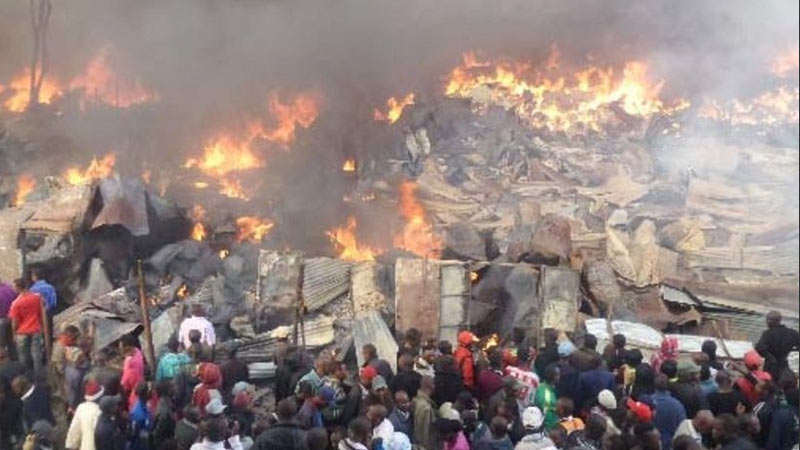
Rigathi Gachagua has once again reduced a national tragedy to tribal persecution. In recent remarks, the impeached former Deputy President claimed the latest Gikomba Market fire was a “targeted move to cripple the Kikuyu and Kamba business community,” painting it as part of a broader government plot against Mt Kenya interests.
This is not analysis. It is calculated ethnic gaslighting.
Gikomba Market has suffered recurrent fires for decades, long before President William Ruto took office. Between 2015 and 2021 alone, traders documented at least 15 major fire incidents.
The deadliest occurred in June 2018 under former President Uhuru Kenyatta, when 15 people died and over 60 were injured. President Kenyatta ordered investigations, but no lasting solution emerged. Fires continued through 2019, 2020 and 2021. The problem is structural — overcrowding, poor infrastructure, electrical faults and suspected arson linked to land disputes — not a recent ethnic conspiracy.
In contrast, Ruto’s administration has moved beyond rhetoric. The President has committed over Sh5 billion to transform Gikomba into a modern, multi-storey trading hub, with phased construction already underway. He has publicly vowed to end land grabbing at the market and insisted on no evictions without proper relocation. These are concrete steps, not the night raids Gachagua previously condemned when they happened under previous administrations.
Gachagua’s narrative collapses under basic scrutiny. Gikomba is not a Kikuyu-Kamba enclave. It is Kenya’s largest open-air market, serving traders and consumers from every community. Kikuyus sell to Kambas, Luos, Luhyas and Somalis — and vice versa. The economy of Gikomba is interconnected, not tribal. To suggest the fire only hurts “our people” is both factually wrong and dangerously divisive.
This is the same pattern Gachagua has perfected since his impeachment: every fire, demolition or policy is reframed as an attack on Kikuyus to keep Mt Kenya in permanent grievance mode. It is not leadership. It is the politics of a man who, having lost institutional power, now seeks relevance by poisoning community relations and reducing complex national challenges to ethnic score-settling.
Kenyans deserve leaders who solve problems, not those who exploit tragedies to deepen divisions. Gachagua’s Gikomba narrative is not just intellectually lazy it is politically reckless.
About the Author