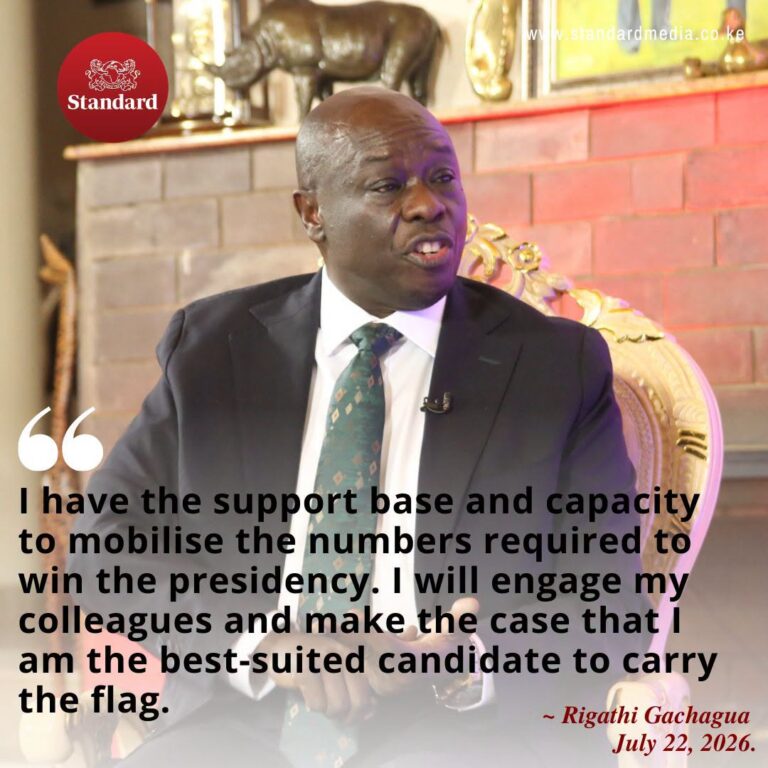
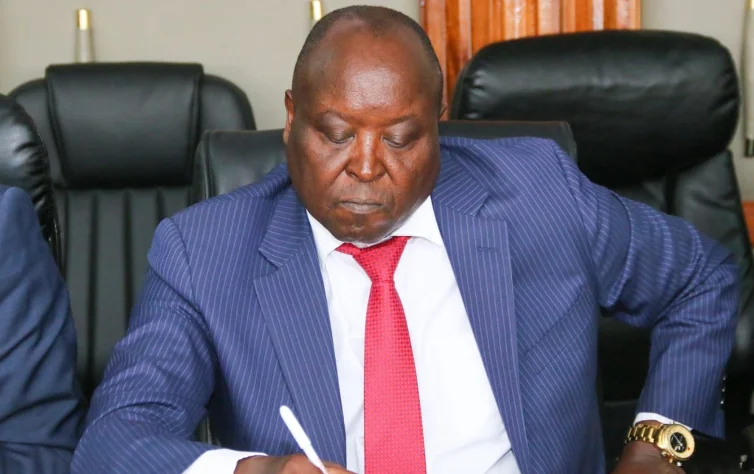
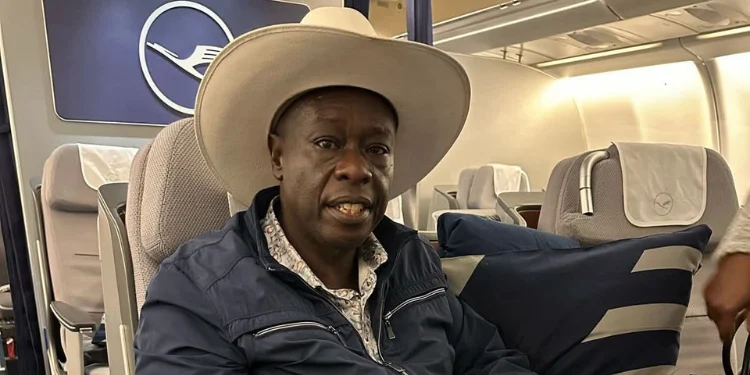
As Kenya gears up for the next election cycle, the opposition is still battling to expand beyond its traditional strongholds. A big headache? The divisive political style linked to former Deputy President Rigathi Gachagua.
You know how Kenyan politics works — it should build bridges like a good matatu conductor squeezing in one more passenger. But Gachagua’s messaging often feels like it’s prioritising regional and ethnic interests over national unity. As the joke goes: “Why did the politician cross the road? To tell the other side their votes are cousins… but only during elections!”
While rallying his base might work short-term, it risks alienating communities who feel excluded. For a coalition to win, it must speak to all Kenyans — from Rift Valley farmers to Coast fishermen — not just play ethnic arithmetic. Kenyans say: “Tribal politics is like ugali without soup — it fills you up but leaves everyone hungry for real change.”
Voters outside the core base hesitate, seeing it as dominated by one group. History shows successful movements unite around jobs, economy, and governance, not “Hi cousins!” chants that go viral but divide. Another classic: “In Kenya, we don’t do politics; we do family reunions every five years!”
For the opposition to be a real alternative, it must ditch divisive rhetoric for inclusion. Kenya’s future needs leaders who unite us like nyama choma at a harambee — not walls. As Kenyans joke, “Unity is the only coalition that never loses seats!”
The path to power? Transcend tribe, offer real vision. Otherwise, it’s just another political meme that trends but doesn’t deliver.
About the Author