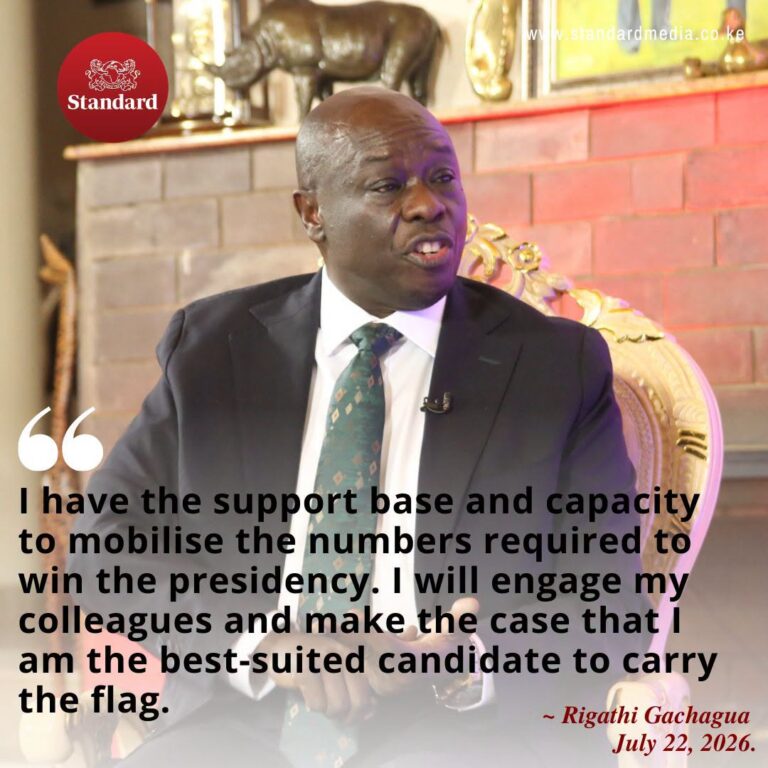
Speak to voters across Mt Kenya about the idea that Rigathi Gachagua plans to auction their votes to President William Ruto, and many will dismiss it outright. To them, the matter is settled. They are not supporting Ruto, they insist, and no political actor—not even Gachagua—can influence that decision. In their minds, August 2027 is already decided.
Gachagua understands this psychology perfectly. That is why he has deliberately positioned himself as the loudest and most aggressive champion of the “one-term president” slogan. He has tapped directly into emotion—anger, betrayal, and regional pride—convincing voters that he is the sharpest weapon against Ruto. Emotionally, the message lands. It reassures Mt Kenya voters that resistance is not only possible but guaranteed.
Many are even ready to wake up at 5:00 a.m. on election day to make that statement.
What is rarely discussed, however, is what happens after the vote is cast. Once ballots are dropped into the box, the voter’s role effectively ends. From that moment on, power shifts to those elected and, more critically, to whoever controls them. That is where real politics begins—and where deals are made.
By voting strictly along party lines driven by anger and symbolism, Mt Kenya risks handing Gachagua enormous bargaining power: over 80 Members of Parliament, 12 governors, 12 senators, 12 women representatives, and more than 420 Members of County Assemblies. These leaders will not be politically independent. Their loyalty will lie with the party leader who sponsored and protected their political survival.
Armed with such numbers, Gachagua gains leverage not to dismantle the system, but to negotiate with it. And the most likely beneficiary of that negotiation is President Ruto. The leaders elected in the name of protest will quietly be converted into bargaining chips. They will no longer work primarily for the voters who elected them, but for the political interests that traded them.
In that scenario, Ruto will not govern for Mt Kenya. He will govern with leaders whose allegiance he has effectively secured. And when that reality sets in, it will already be too late.
Mt Kenya must therefore look beyond slogans and anger. The region must choose leaders based on accountability, independence, and service—not popularity and emotion. Otherwise, come 2028, voters may wake up to a familiar realization: ilikuwa mchezo wa taon.
About the Author