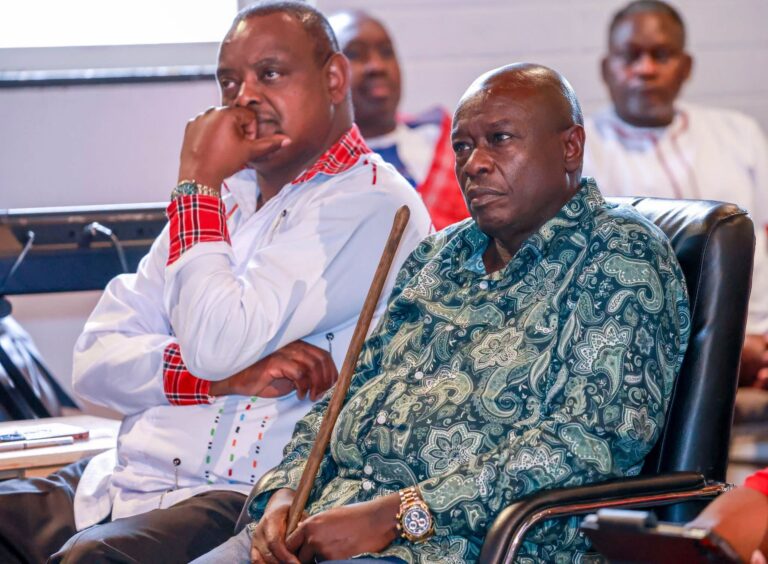
The recent remarks by DCP leadee Rigathi Gachagua about how his family handles their tithe have stirred an important national conversation—not about religion, but about leadership ethics and the mindset of the political class. According to Gachagua, instead of giving 10% of their income to the church, his family channels it through his wife, Pastor Dorcas, who then “passes it on to God.” The statement may have been delivered casually, but its implications are anything but casual.
At face value, it sounds like a lighthearted comment about household religious practices. But beneath the humour lies a deeper message: Gachagua is indirectly telling the clergy—and Kenyans at large—that he doesn’t trust religious institutions with his family’s giving. His household’s resources, he suggests, are safer within the family circle rather than in the hands of outsiders. When viewed against the backdrop of his often-repeated idea of “shareholding,” the statement becomes even more revealing.
This is not merely a comment about tithing. It exposes a broader mentality: a worldview rooted in exclusivity, self-protection, and the prioritization of the family unit above all else. Shareholding politics, as Gachagua frames it, is essentially about who “owns” what, who deserves benefits, and who falls outside the privileged circle. Extending this same logic to God’s tithe—by routing it through the family rather than the church—paints a picture of a leader whose instincts are deeply individualistic.
Such thinking mirrors the political culture he has been accused of nurturing: a culture in which loyalty is transactional, resources are family-centered, and public duty is interpreted through the lens of personal or clan benefit. It is shareholder politics dressed up as religious conviction.
Gachagua’s comment may have been meant as a joke. But jokes often reveal what people truly believe. And what this one reveals is a leadership mindset defined by self-interest on steroids—one that Kenyans must listen to carefully, not laugh off lightly.
About the Author