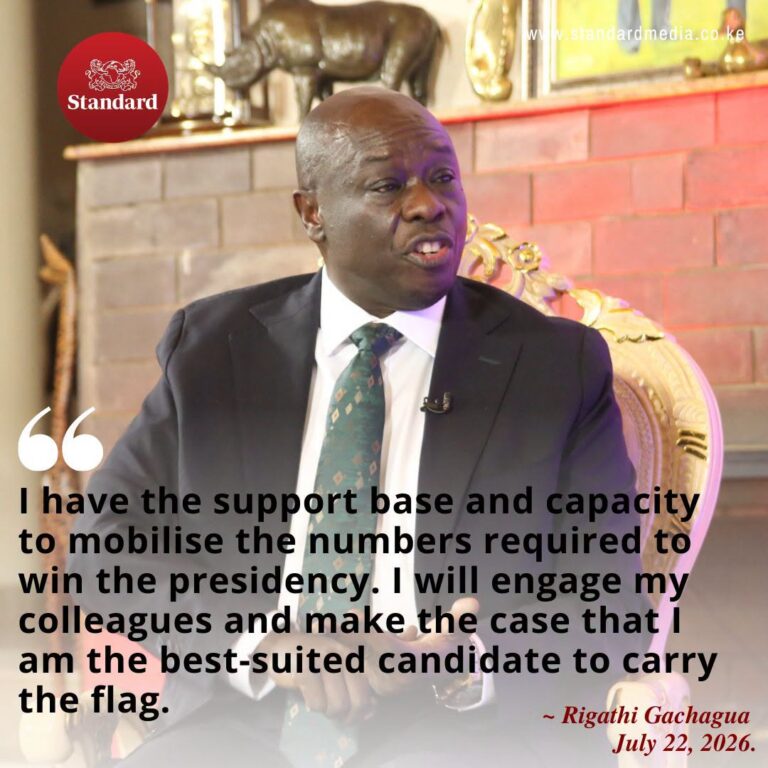
Rigathi Gachagua has once again shown the very traits that led to his impeachment. In his characteristic fashion of saying anything and everything in the name of courting public sympathy, he has exposed the conduct that made his working relationship with President William Ruto untenable.
In a recent statement, Gachagua openly admitted that he used to defy his boss — ignoring the President’s phone calls, questioning his decisions, and even confronting him disrespectfully. These confessions, made casually in public, only confirm what many within government circles had long whispered: that Gachagua was not just difficult to work with, but dangerously insubordinate.
Leadership, especially at the highest levels, demands mutual respect, coordination, and loyalty to collective decisions. When a deputy chooses confrontation over consultation and pride over partnership, the result is chaos. The office of the Deputy President is not a platform for rebellion or self-glorification; it is an institution meant to support national unity and policy coherence.
By his own admission, Gachagua wasn’t a team player. He made governance a personal contest, turning every disagreement into a public drama. And that is precisely why his impeachment, though politically charged, carried moral weight.
If you were in the President’s position, would you continue to work with a deputy who disrespects your authority, defies instructions, and undermines your leadership in public? Gachagua’s latest statements only serve as a reminder that arrogance and insubordination are not signs of courage — they are symptoms of poor judgment.
In the end, Gachagua was not impeached because he was outspoken; he was impeached because he was out of order.
About the Author