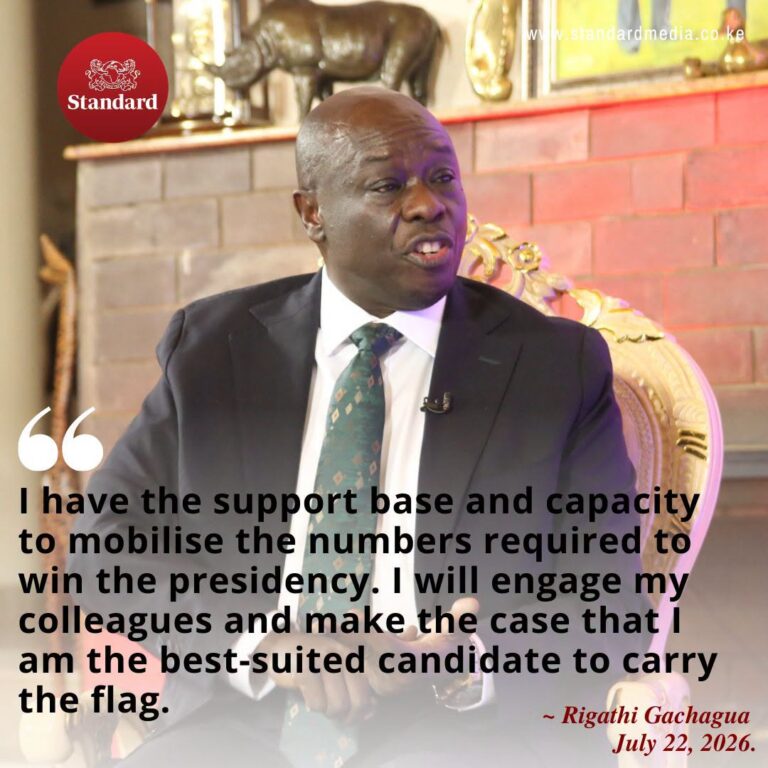
October 2024 marked a decisive turning point in Kenya’s political landscape when former Deputy President Rigathi Gachagua was impeached by the very political allies who once stood by him. At the time, some questioned whether the move was justified. Today, his conduct after impeachment has provided a clear answer—our leaders were right.
Gachagua has carried on with relentless tribal politics and divisive rhetoric, confirming the fears that surrounded his leadership. Instead of embracing national unity, he has doubled down on the same ethnic chest-thumping that cost him credibility while in office. His obsession with Mt. Kenya supremacy and his constant framing of politics through a tribal lens shows he was never fit to be a national leader.
In a country that thrives on diversity, Gachagua’s approach was dangerous. His brand of politics sought to reduce Kenya into ethnic silos, pitting communities against one another. This was not just short-sighted but also toxic to the fragile fabric that holds the nation together. Leaders who voted to remove him understood that Kenya cannot afford a deputy—or a potential future president—who thrives on division rather than inclusion.
Impeachment was not just a political move; it was a safeguard for the country’s future. Gachagua’s continued tribal rhetoric has vindicated the decision. Instead of working to rebuild his image post-impeachment, he has chosen to retreat into a corner of ethnic politics, further exposing the dangers he posed while in power.
Looking back, Parliament acted wisely. Kenya needs leaders who unite, not those who divide. By impeaching Gachagua, the country avoided the risk of being dragged backward into the politics of hate and tribal balkanization. His own words and actions after impeachment prove beyond doubt that the decision to remove him was both timely and necessary.
About the Author