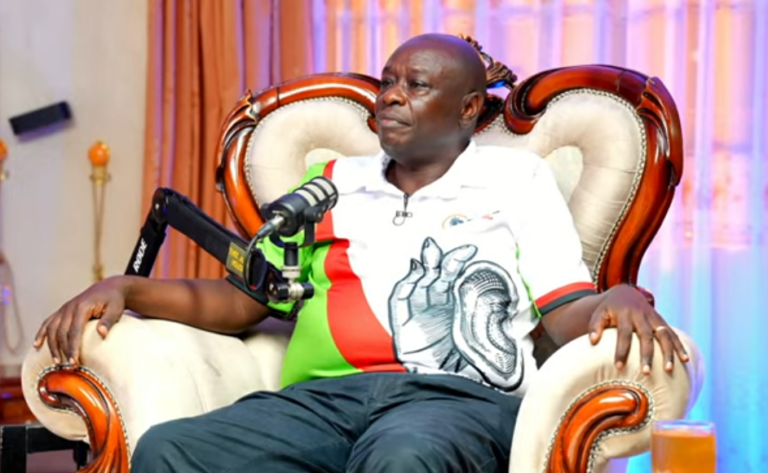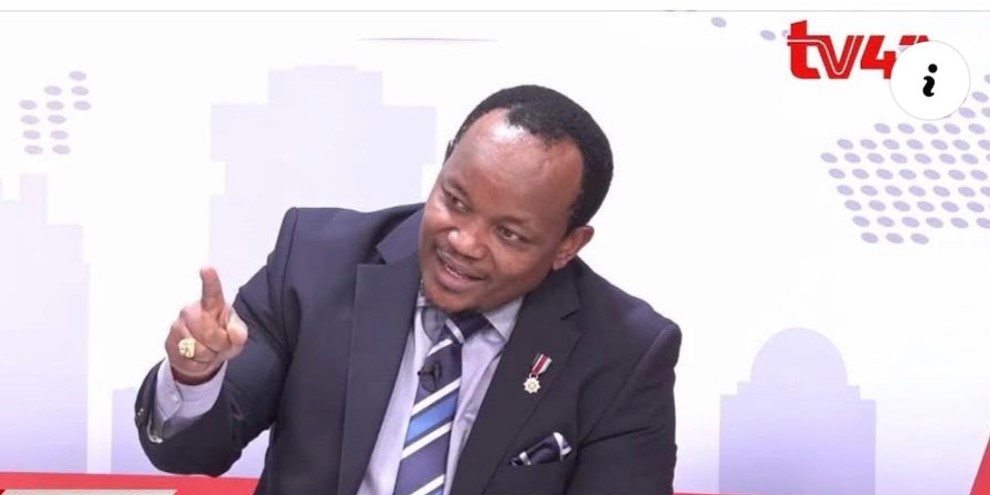
In a candid and wide-ranging interview, on TV47’s Morning Breakfast Show today, former Nyeri Town MP Hon. Ngunjiri Wambugu made a strong case for legal reform, institutional accountability, and measured responses to civic unrest as essential pillars of Kenya’s evolving democracy.
Wambugu, a prominent voice on governance and rule of law, called for a national rethink on how Kenya interprets its Constitution, engages in protest, and handles contentious public issues such as enforced disappearances and the National Government Constituency Development Fund (NG-CDF).
“The Constitution is not set in stone. It must evolve with society and technology,” said Wambugu, stressing that Kenya’s legal framework must keep pace with contemporary challenges—including the digital activism of Gen Z and the increased use of social media platforms like X to demand accountability.
Wambugu’s remarks come at a time of heightened political tension, as Parliament considers the Public Order (Amendment) Bill, 2025, sponsored by Nairobi Woman Representative Esther Passaris. The bill seeks to restrict demonstrations near key government installations, a move that has sparked fierce public debate. However, Wambugu dismissed the uproar as premature.
“It’s just a proposal. Parliament can amend it entirely. What we must decide is whether we need a law to manage how demonstrations are conducted,” he said, urging a more constructive public discourse on how to balance constitutional rights and public order.
Abductions and the Quest for Truth
On the sensitive issue of alleged abductions, Wambugu criticized the growing trend of politicizing tragedies at the expense of accountability. Referring to the case of blogger Albert Ojwang, whose mysterious death shocked the nation, he lamented that truth is increasingly sacrificed in favor of scoring political points.
“We’re no longer searching for the truth—we’re trying to win arguments while lives are being lost,” he said.
He called for public inquests to provide closure and challenged the state to clarify whether enforced disappearances are the actions of rogue officers or part of a deeper systemic problem.
“When does a missing person officially become an abducted person? That lack of clarity is dangerous,” he warned, urging security agencies to act faster and with more transparency.
The Demonstration Dilemma
A longtime advocate for peaceful protest, Wambugu shared personal experiences dating back to 13 years ago when he obtained court orders to hold a demonstration in Limuru. He emphasized the need to protect not just demonstrators but also non-protesters who often suffer unintended consequences.
“I have a right to demonstrate. But someone else has a right to move freely. We must find a legal structure that accommodates both,” he said.
The recent anniversary of the 2024 Finance Bill protests—where 16 people died and over 400 were injured—exposed the urgency of legal clarity. Wambugu stressed the need for agreed-upon protocols, including designated protest routes and better police coordination, to prevent loss of life and destruction of property.
“You can’t stop me a few meters from delivering a petition to Parliament. We need defined processes—not chaos,” he said.
NG-CDF: A Necessary Tool Under Scrutiny
Turning to the National Government Constituency Development Fund, Wambugu acknowledged the courts’ ruling declaring the fund unconstitutional but maintained that the solution lies in public participation and legislative refinement.
“Take it to the 290 constituencies and ask wananchi what they think,” he said.
“I used to oppose CDF—until I saw its impact firsthand in Parliament. It works where other systems don’t.”
Wambugu dismissed claims that NG-CDF uniquely compromises separation of powers, arguing that MPs already influence how other funds—such as those in KURA or the Ministry of Education—are implemented.
“The real issue is the gap between the legal ideal and the political reality. Politics is a conflict over resources. MPs will naturally fight for their constituencies,” he added.
Accountability: The Missing Link
Throughout the interview, Wambugu returned to a common theme—accountability. Whether addressing the state’s handling of abductions, Gen Z activism, or inflammatory political rhetoric, he emphasized the need for every Kenyan—citizen or leader—to be responsible for their words and actions.
“The difference between where our democracy is now and where it should be is accountability. Let’s make it the standard for everyone,” he said.
“Even the law itself—and those who enforce it—must be accountable for the decisions they make,” he concluded.
As Kenya grapples with its democratic evolution, Wambugu’s TV47 Morning Breakfast Show appearance serves as a clarion call. With the Passaris bill, unresolved abductions, and NG-CDF debates dominating headlines, his message is clear: Kenya must move beyond reactive politics to build a democracy where rights, accountability, and order coexist. As Saba Saba approaches, the nation watches to see if its leaders will heed this call or let political jostling prevail.
About the Author