In the rugged heartland of Kenya’s Mount Kenya region, where political loyalties run as deep as the rivers carving through its valleys, Rigathi Gachagua’s story reads like a Shakespearean tragedy—ambition unchecked, promises broken, and a trail of scorched relationships.
Once hailed as the fierce defender of Kikuyu interests, Gachagua’s political descent reveals a man whose hunger for power has left him isolated, his credibility in tatters, and his legacy stained by dishonesty and divisive rhetoric. As Embu Governor Cecily Mbarire and other regional leaders reel from his relentless attacks, the impeached former deputy president’s actions expose a pattern of betrayal and hypocrisy that threatens to fracture the very region he once claimed to champion.
Gachagua’s troubles began long before his historic impeachment in October 2024, the first of its kind under Kenya’s 2010 Constitution. Elected in 2022 as President William Ruto’s running mate, Gachagua positioned himself as the self-anointed kingpin of Mt. Kenya, leveraging his Kikuyu roots to rally the region’s voters.
He boldly declared himself the senior-most politician in the area, a claim that reeked of hubris given the presence of seasoned leaders like Kithure Kindiki, then a senator with a far more distinguished political resume. Gachagua’s assertion was not just a power grab; it was a calculated move to sideline rivals and cement his dominance. Yet, his tenure as deputy president was marred by accusations of corruption, ethnic divisiveness, and insubordination—charges that culminated in his ouster by the Senate on five counts, including inciting ethnic tensions and violating his oath of office.
Post-impeachment, Gachagua’s behavior has only grown more erratic, his attacks more venomous. Embu Governor Cecily Mbarire, a respected figure in her own right, has become a prime target. In June 2025, Mbarire accused Gachagua of orchestrating chaos in Embu, alleging he funded goons to disrupt protests and even incited violence against her. “I do not care how strong you may be, but you will not intimidate me anymore,” Mbarire declared, daring Gachagua to “take her life if he’s man enough.”
Her words, laced with defiance, reflect the growing frustration among Mt. Kenya leaders tired of Gachagua’s bullying tactics. Social media posts on X amplify this sentiment, painting him as a destabilizing force who sows discord to cling to relevance.
Gachagua’s hypocrisy is perhaps most glaring in his crocodile tears over former President Uhuru Kenyatta. During the 2022 campaign, he brazenly accused Uhuru’s father, Jomo Kenyatta, of orchestrating the 1975 assassination of Josiah Mwangi Kariuki—a claim that alienated many in Mt. Kenya, where Uhuru remains a revered figure. When the political winds shifted, Gachagua pivoted, publicly begging Uhuru for forgiveness, claiming he was merely following Ruto’s orders. This excuse rings hollow.
Insiders reveal Gachagua’s attacks were not scripted by Ruto but were instead a calculated bid to undermine Uhuru’s influence and claim the Mt. Kenya crown for himself. His apology, far from sincere, was a desperate attempt to salvage his sinking political ship after impeachment stripped him of his title.
Yet, Gachagua’s attacks didn’t stop with Uhuru. He turned his sights on other Mt. Kenya leaders who dared to differ. His attacks on Deputy President Kithure Kindiki, the region’s new senior-most politician, are equally relentless. Despite preaching unity, Gachagua daily lambasts Kindiki, a calm and accomplished leader who replaced him after impeachment.
Kindiki, a former senator and Ruto’s trusted ally, represents everything Gachagua is not: measured, inclusive, and focused on governance over grandstanding. Gachagua’s assaults on Kindiki betray his own mantra of regional solidarity, revealing a man who practices division while preaching unity.
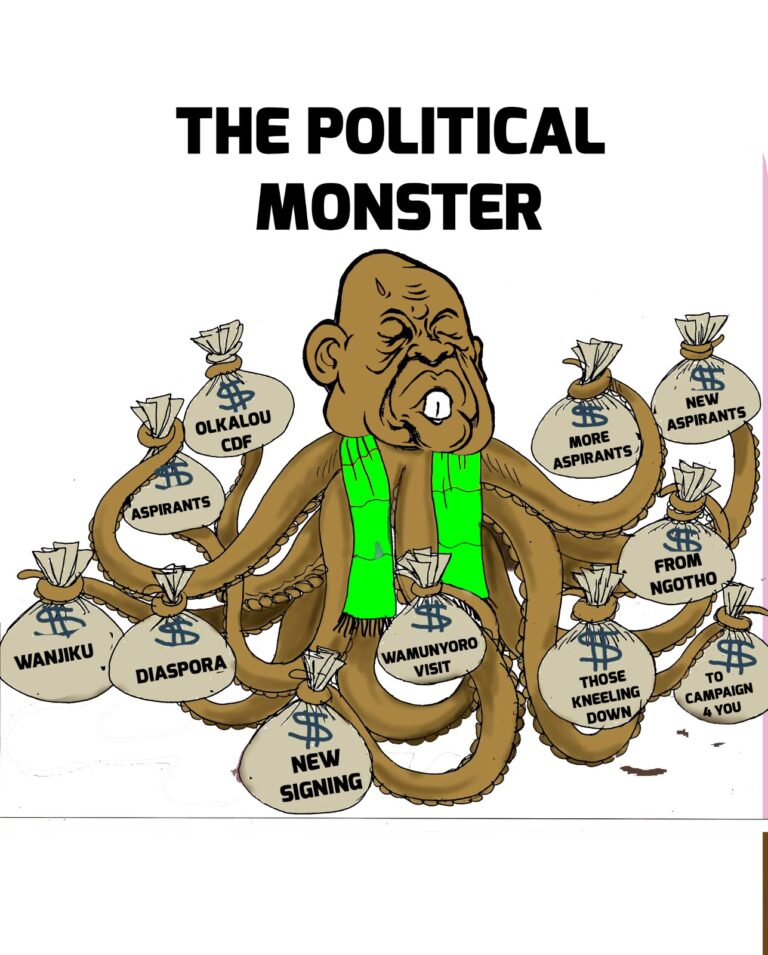
The irony is stark. Gachagua, who once branded himself the “truthful man,” has become a symbol of dishonesty. His claims of being a victim of political persecution fall flat when juxtaposed against his history of aggressive, ethnically charged rhetoric and his pending court cases over corruption and money laundering. His rural village of Wamunyoro may have become a pilgrimage site for supporters, but it’s also a stage for his populist theatrics, where he peddles divisive slogans to mask his dwindling influence. As Mt. Kenya leaders like Mbarire and Kindiki rally to stabilize the region, Gachagua’s antics only deepen the fractures he claims to heal.
In the end, Rigathi Gachagua’s story is one of self-inflicted wounds. His attacks on fellow leaders, his hollow apologies, and his refusal to practice the unity he preaches have eroded his credibility. Mt. Kenya deserves better than a leader who thrives on chaos and betrayal. As the region looks to 2027, it’s clear that Gachagua’s brand of politics—divisive, dishonest, and desperate—has no place in its future. The mountain is moving on, and Rigathi, it seems, is being left behind.
About the Author