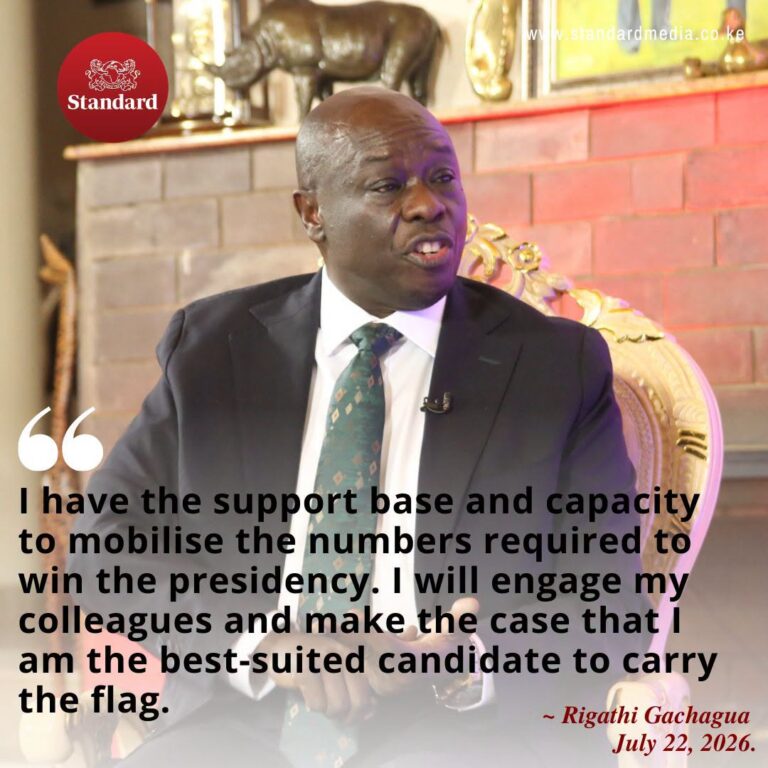
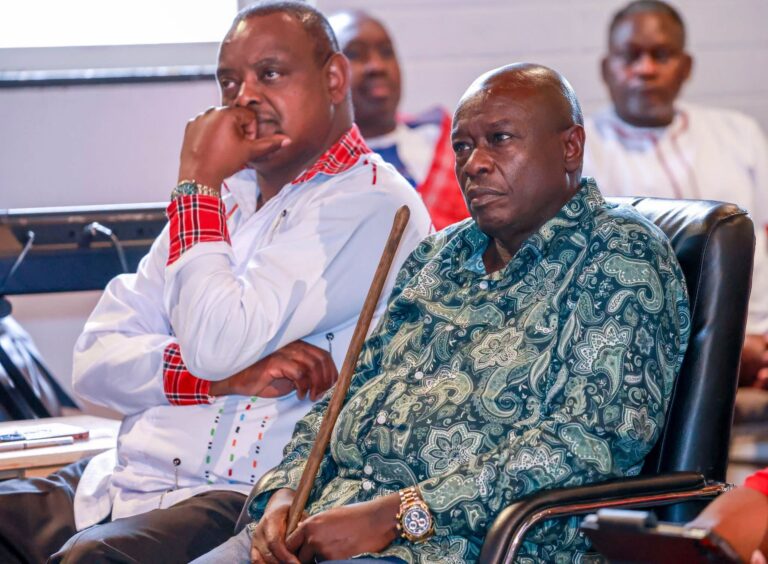
As political temperatures rise ahead of 2027, former Deputy President Rigathi Gachagua is once again on the move — rallying Mt. Kenya voters and calling for a new political formation. But his constant exits from government and repeated calls to “form the next government” have sparked concerns over his leadership consistency and commitment to long-term development.
Gachagua’s pattern is familiar. In 2017, he played a key role in forming the Jubilee Party, which led President Uhuru Kenyatta to a second term. He was elected Member of Parliament for Mathira under the same ticket. Yet, within two years, he distanced himself from the administration and began preparing for a new alliance that would take him to the Deputy President’s seat in 2022.
In 2024, midway through his term as Deputy President, Gachagua was impeached after internal government fallout. Barely months later, he resurfaced on the political scene, now urging Mt. Kenya leaders and voters to gear up for 2027 — once again promising a new government.
Political observers are asking whether this cycle — of forming, winning, then exiting — truly serves the interests of Mt. Kenya.
“This style of politics is unstable. Leadership is not about jumping from one government to another. It’s about service and long-term development,” said a political analyst based in Nyeri.
Critics argue that Gachagua is more focused on power than progress. They point out that if his trend continues, he could abandon yet another administration by 2029 and begin preparing for 2032 — turning Mt. Kenya into a permanent political launchpad.
As the region debates its future, one question lingers: is Rigathi Gachagua offering leadership, or just another round of politics as usual?
For now, Mt. Kenya must decide if it wants to keep following a leader always planning the next move — or one focused on delivering lasting results.
About the Author