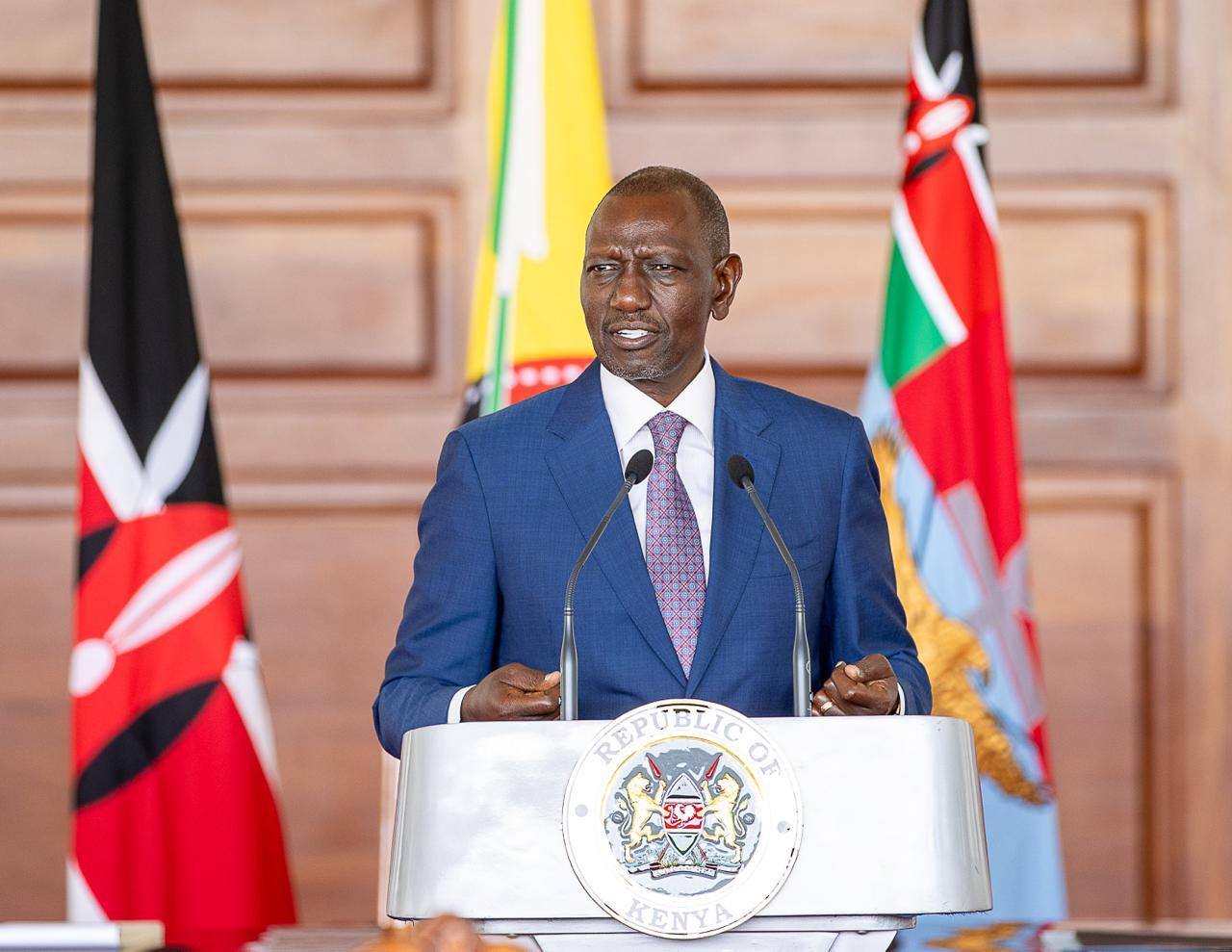
The results of the just-concluded Emurua Dikirr by-election have reaffirmed President William Ruto’s firm control over his political strongholds, while exposing the faltering momentum of Rigathi Gachagua’s attempts to challenge his authority.
The contest, widely viewed as a supremacy battle between Ruto’s United Democratic Alliance (UDA) and Gachagua’s fledgling Democracy for the Citizens Party (DCP), has decisively settled the debate. UDA’s David Keter clinched victory with 18,446 votes against DCP’s Vincent Rotich, who garnered 10,437—a commanding margin of 8,009 votes. This is the widest gap ever recorded in Emurua Dikirr since the constituency’s creation in 2013.
To appreciate the scale of this win, the 2017 general election saw Johanna Ng’eno triumph by just 2,391 votes, while in 2022, the margin widened to 5,362. The latest result not only consolidates Ruto’s dominance in the Rift Valley but also underscores the limited traction of Gachagua’s new political outfit.
The by-election came on the heels of Gachagua’s fiery remarks in Kajiado, where he publicly dismissed Ruto’s political acumen. Speaking during a thanksgiving ceremony at Korompoi village on May 1, Gachagua declared, “I don’t want to brag, but you don’t know any politics! I will teach you politics next year!” His confidence was unmistakable, promising that DCP would form the next government and integrate the Maa community into national leadership.
Yet, the Emurua Dikirr outcome tells a different story. Far from teaching Ruto politics, Gachagua appears to be learning a hard lesson in grassroots mobilization and party loyalty. The results reveal that rhetoric alone cannot substitute for structure, organization, and sustained engagement with voters.
Ruto’s political machinery, anchored in UDA’s disciplined messaging, robust grassroots networks, and a focus on development delivery, continues to prove formidable. His party’s ability to maintain cohesion and project a unified front has been central to its success. In contrast, Gachagua’s DCP, though ambitious, lacks the organizational depth, ideological clarity, and national appeal required to mount a credible challenge.
The Emurua Dikirr by-election has therefore exposed the limits of Gachagua’s political experiment. His loss raises serious questions about his capacity to rally support beyond his ethnic base and to translate his fiery rhetoric into tangible political capital.
For Ruto, the message is clear. His political base remains intact, his party machinery resilient, and his influence unshaken. If the numbers are anything to go by, the president has not only weathered the political storm but emerged stronger from it.
About the Author