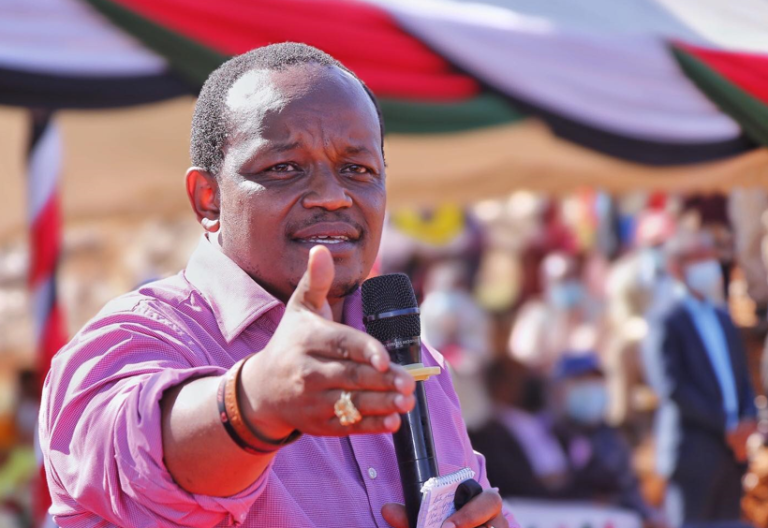
Former Nyeri Town MP Ngunjiri Wambugu has reaffirmed that the Jubilee Party is owned by its ordinary members, not its leaders, in a strongly worded statement issued on Monday.
Wambugu outlined ten key points emphasizing that the party’s leadership holds its positions in trust for members and must operate within the confines of the party’s constitution. He said Jubilee’s foundation is built on the principle that members are the ultimate authority.
“All leaders are members of the party, but not all members are leaders of the party,” he stated, arguing that this structure makes ordinary members more important than those in leadership.
He further noted that Jubilee’s main objective ahead of the 2027 General Election is to regain political power—“pawa”—to implement policies rooted in its founding ideals.
In a pointed remark seemingly directed at the party’s Secretary General, Wambugu warned that no official should view themselves as superior to ordinary members. He challenged anyone who believes otherwise to attempt to expel members from the party.
Wambugu revealed that Jubilee plans to field 1,882 candidates in the 2027 elections, including 1,450 Members of County Assembly (MCAs), 290 Members of Parliament (MPs), 47 Women Representatives, 47 Senators, 47 Governors, and one Presidential candidate—all drawn from the party’s ordinary membership.
He stressed that, under the party’s constitution, no member’s ambition is greater than another’s and cautioned against the use of external influence to undermine fellow members. Such actions, he said, go against the party’s guiding principles.
Wambugu reminded the party leadership of its constitutional duty to treat all aspirants equally and support them fairly. “The leadership must support all of these 1,882 members equitably so that jointly those who get elected can influence policy at their various levels,” he said.
He also urged newly appointed officials to familiarize themselves with the party’s constitution before making public statements, adding that he could seek clarification from the Office of the Registrar of Political Parties (ORPP) if necessary.