A year ago, President William Ruto looked like a classic one-term president. Public anger was high, the cost of living was biting, and the Gen Z protests had shaken the foundations of his government. For the first time since 2022, power felt vulnerable. Fast forward a year later, and Ruto now looks increasingly assured of a second term — Tutam. What changed? Ironically, not Ruto himself, but Rigathi Gachagua.
Gachagua’s politics have done what Ruto’s critics could not: rebuild sympathy around the President by poisoning the alternative. His divisive, tribal-first approach has reshaped national politics away from issues and back into ethnic camps. Where Gen Z protests once cut across communities and class, Gachagua’s rhetoric pushed young people back into tribal cocoons, killing the momentum of a national civic movement.
His “shareholding” narrative — the idea that power and resources belong to certain communities by right — alienated millions of Kenyans who believed the protests were about fairness, accountability, and economic justice. Instead of confronting Ruto’s failures, the opposition conversation became about identity, entitlement, and exclusion. That shift benefited the incumbent.
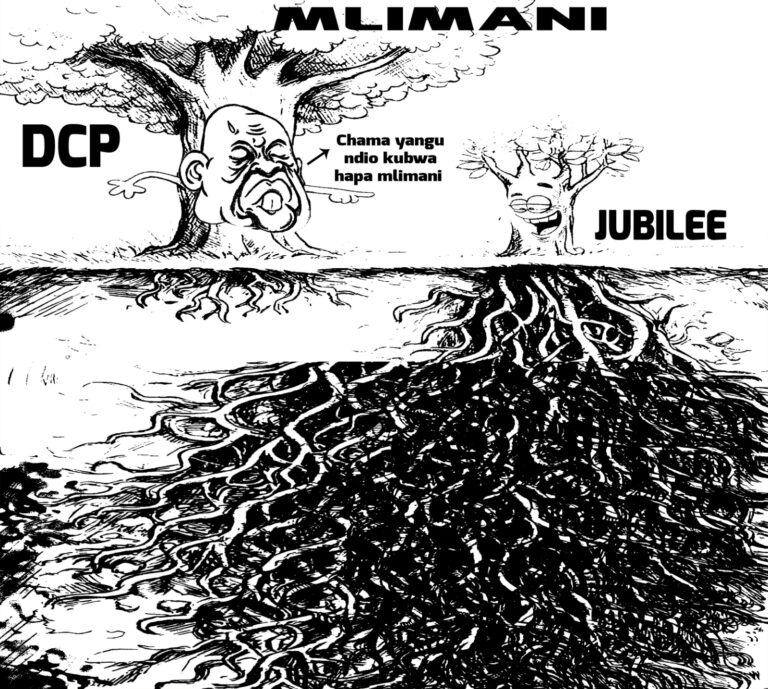
Even worse, Gachagua attempted to “own” opposition politics, positioning himself as kingmaker, gatekeeper, and spokesman for dissent. This domineering style crowded out credible opposition leaders and fractured coalitions before they could mature. His antagonistic, confrontational politics replaced strategy with ego and noise.
Compare this to 2002 or 2013, when opposition unity, discipline, and a national message made incumbents vulnerable. Today, the opposition looks reactive, bitter, and regionally boxed in — largely because Gachagua insists on an “us versus them” worldview.
Ruto, meanwhile, has benefited from appearing calmer, more presidential, and nationally focused by comparison. Faced with chaos on the other side, many Kenyans are choosing stability over uncertainty.
In short, Gachagua did not weaken Ruto. He rehabilitated him. By narrowing politics to tribe, entitlement, and personal dominance, Gachagua emptied the opposition of its moral and national appeal — and cleared the path for Tutam.