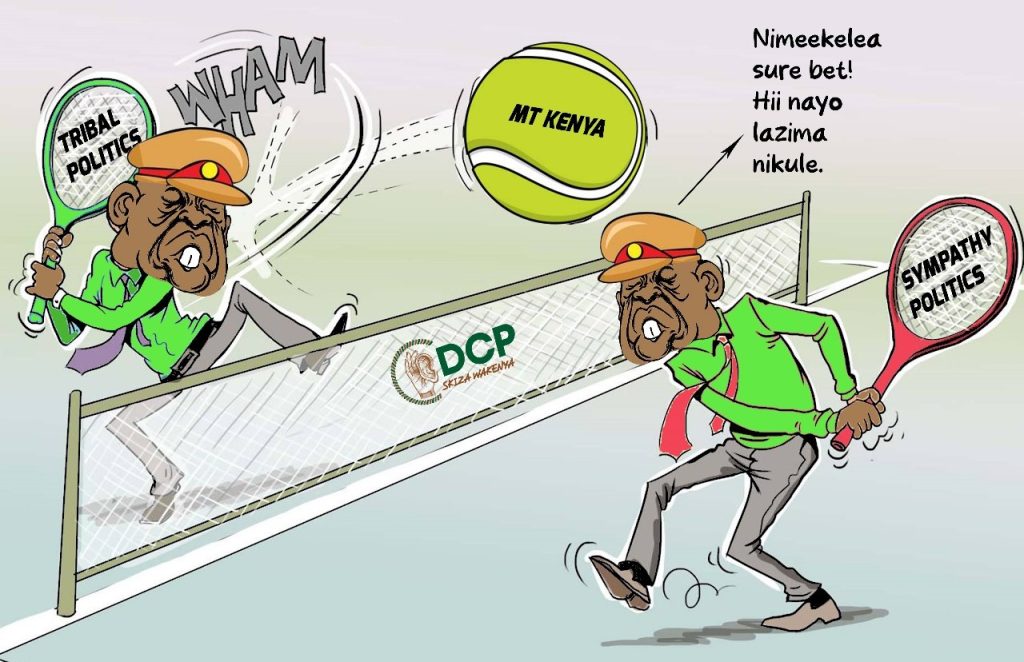
Former Deputy President Rigathi Gachagua’s continued reliance on tribal politics is not only outdated — it’s dangerous. In a country where the youth are demanding jobs, fair representation, and inclusive development, Gachagua’s insistence on ethnic loyalty and “Mt. Kenya shareholding” narratives feels like a step backward.
Kenya’s future is not tribal — it is generational, economic, and issue-based. The new Kenyan voter is not interested in which region you come from. They want to know whether you will fight for lower cost of living, protect devolution, create opportunities, and lead with integrity. Gachagua’s ethnic rhetoric, which pits communities against each other in the name of unity, undermines national cohesion and peace.
Worse still, his approach reduces entire communities to voting machines, rather than stakeholders in development. This strategy does not empower people — it cages them within narrow political boundaries, making them dependent on tribal kingpins instead of strong institutions.
Gachagua’s style mirrors the old “Big Man” politics — where tribal loyalty was rewarded over competence. But Kenya has moved on. The hustler narrative that helped propel the Kenya Kwanza coalition into power was built on inclusion and breaking tribal barriers. Ironically, Gachagua has become a loud contradiction of that promise.
As we look ahead to 2027 and beyond, leaders who cling to tribal calculations will find themselves left behind. The next wave of leadership will be defined by economic empowerment, youth inclusion, and innovation — not tribal arithmetic.
Kenya must reject any politics that seeks to divide rather than unite. Gachagua may think he is rallying his base, but he is actually alienating the very future he hopes to lead. Tribalism belongs in the past — and Kenya is not going back.