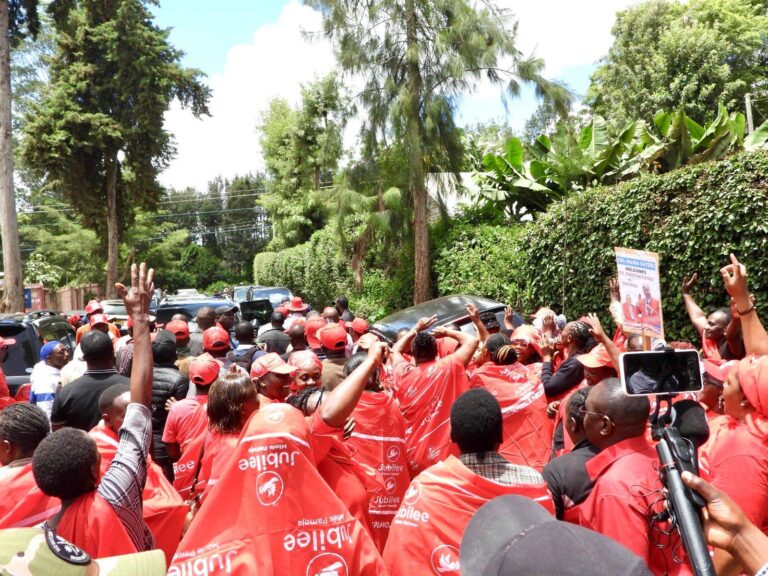
In the heart of Nairobi, where the air still carries the echoes of last year’s anti-Finance Bill protests, Kenya’s Gen Z took to the streets on June 25, 2025, in a somber yet defiant commemoration. They marched to honor the lives lost in 2024, when teargas, bullets, and state-sanctioned violence met their demands for justice and accountability.
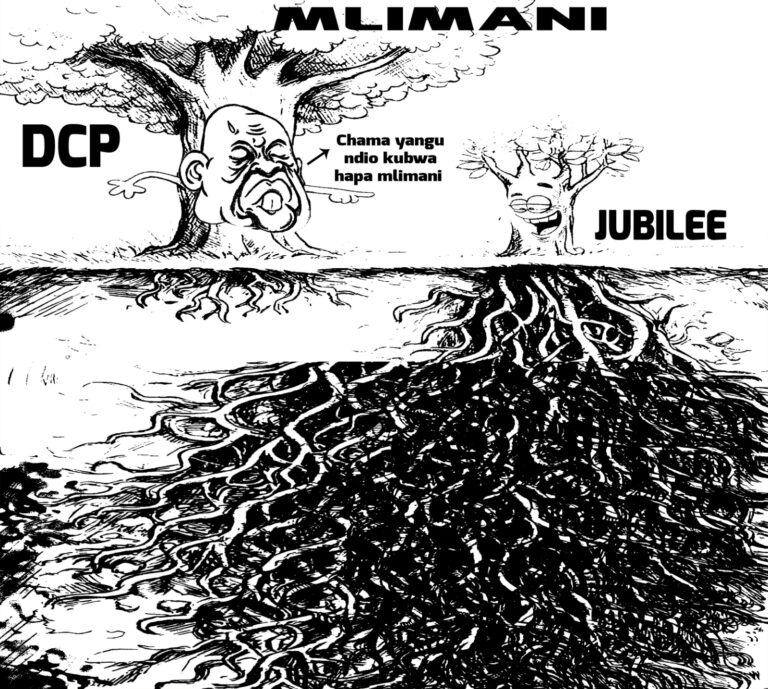
Among them were figures like former Chief Justice David Maraga and Hon Okiya Omtatah, who walked shoulder-to-shoulder with the demonstrators, unafraid to stand in the open, their presence a testament to solidarity. But one man was conspicuously absent: Rigathi Gachagua, the self-proclaimed champion of Kenya’s youth, who has since retreated to the safety of Sunday pulpits to peddle his newfound opposition credentials.
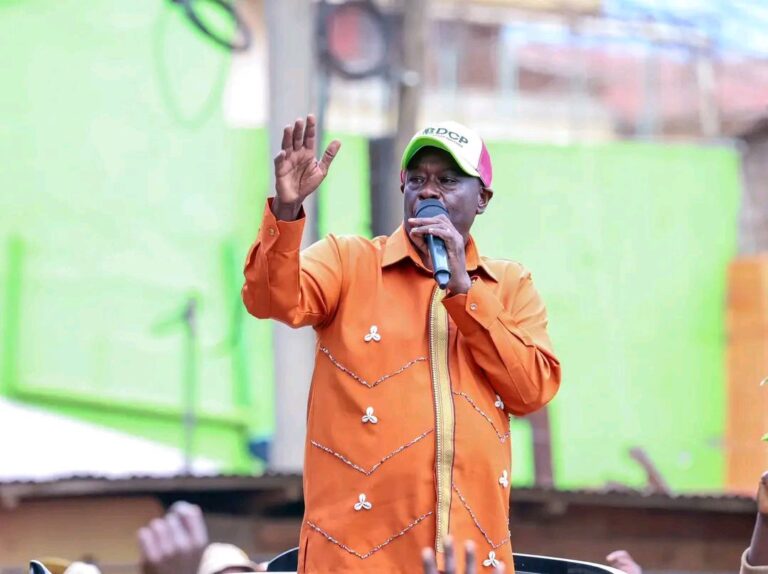
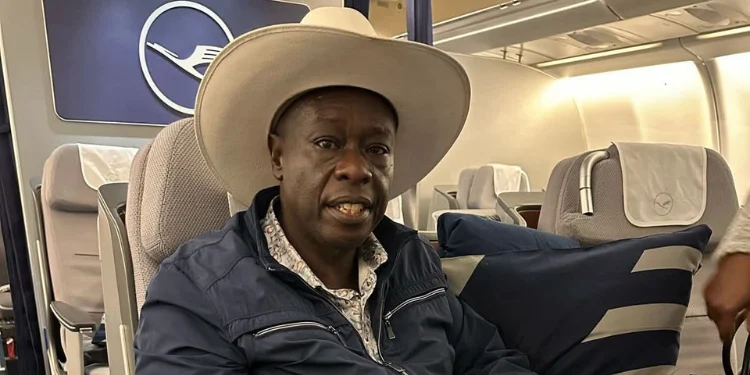
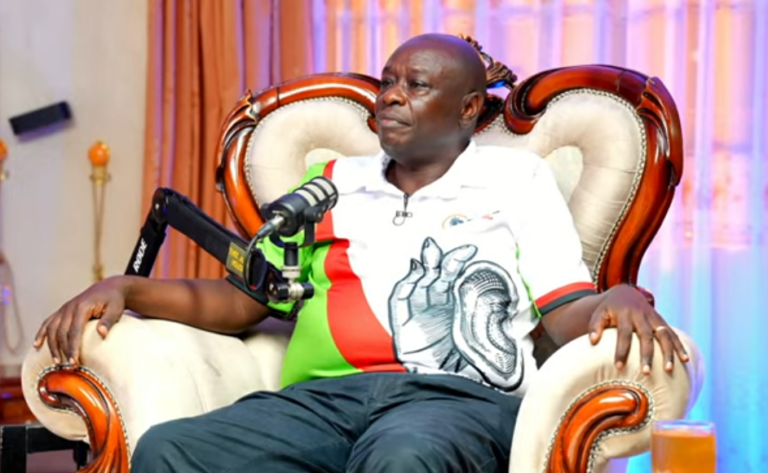
Gachagua, the former Deputy President impeached in October 2024 for charges ranging from insubordination to inciting ethnic violence, has reinvented himself as a voice of the people. From church podiums to vernacular radio stations, he cloaks himself in the language of resistance, claiming to stand with the “children” of Kenya—Gen Z. Yet, when the teargas canisters flew and the youth faced the brunt of police batons on June 25, Gachagua was nowhere to be found.
Not a single flower did he lay, not a single step did he take alongside the mourners . Instead, he left the likes of Maraga, and Omtatah to embody the courage he so loudly claims from the safety of his political rallies.
This is not leadership; it is cowardice dressed in populist rhetoric. Gachagua’s absence during the commemoration march is not an isolated incident but a pattern of opportunism that defines his post-impeachment career. Just days before the protests, he warned Kenya’s youth to stay home, alleging a sinister government plot to infiltrate the demonstrations with hired goons—a claim that, while serious, conveniently absolved him of the responsibility to show up. “I urge our youths not to go to the streets because they might be targeted for killings,” he said on a vernacular station, painting himself as a protector while subtly discouraging the very activism he later claimed to champion. His words, dripping with fearmongering, stand in stark contrast to Maraga and Omtatah, who faced the risks head-on, undeterred by the specter of state violence.
Gachagua’s duplicity runs deeper. In 2023, when the anti-Finance Bill protests first erupted, he was still Deputy President, standing firmly in Ruto’s corner. Back then, he dismissed the demonstrators’ grievances, even suggesting that their presence on the streets invited police brutality. “Had they not come to the streets, there would have been no issue between the police and the demonstrators,” he callously remarked, a statement that now haunts his attempts to rewrite history. While Gen Z mourned their fallen comrades and demanded justice for lives lost to state violence, Gachagua was silent, complicit in the Kenya Kwanza government’s heavy-handed response. Only after his dramatic fallout with Ruto and subsequent impeachment did he pivot, suddenly styling himself as a defender of the youth he once ignored.
His recent antics reveal a man desperate to ride the Gen Z wave for political relevance. In Meru, he unveiled a new catchphrase—“Hi brothers, hi sisters, mabrathee na masistee mko?”—delivered with theatrical flair to a cheering crowd. The phrase, meant to endear him to the masses, instead underscores his penchant for performance over substance. While Kalonzo Musyoka stood at the forefront of the June 25 flower-laying ceremony, calling for Kenyans to light candles in memory of the fallen, Gachagua was busy crafting soundbites, warning President Ruto to “steer clear” of his strongholds in Meru and Ukambani. His rhetoric is less about justice and more about settling personal scores, a power grab thinly veiled as solidarity.
Social media has not been kind to Gachagua’s posturing. Posts on X paint him as a political chameleon, accusing him of trying to “infiltrate and destroy” the Gen Z movement with empty promises and alleged bribes to student leaders. Others call him out for his silence during last year’s bloodshed, with one user bluntly stating, “He kept quiet when protestors and children were being shot by armed goons (police). Akwende huko kabisa!” The sentiment is clear: Gachagua’s newfound activism is seen as a shameless attempt to hijack a movement he neither understands nor genuinely supports.
Contrast this with the actions of Maraga and Omtatah, who have consistently walked the talk.
Gachagua’s defenders might argue that his warnings about protest violence show caution, not cowardice. They might point to his claims of a “sinister plot” as evidence of insider knowledge, a man trying to protect his “children.” But these defenses crumble under scrutiny.
His allegations of government-orchestrated violence lack corroboration, and his absence during the commemoration march betrays his rhetoric. If he truly believed in the cause, why not stand with Kalonzo, Maraga, and Omtatah? Why not lay a single flower for the fallen? The answer is simple: Gachagua’s priority is not justice but relevance. He sees in Gen Z’s energy a wave to ride back to power, a tool to wield against Ruto in his quest for 2027.
This is not the leadership Kenya needs. As the nation grapples with economic hardship, state overreach, and a youth demanding accountability, it deserves leaders who show up—not those who hide behind catchy slogans and Sunday sermons.
Gachagua’s silence on June 25, juxtaposed with his loud proclamations from the safety of pulpits, reveals a man more interested in power than principle.While Maraga and Omtatah walked with the youth, risking their safety to honor the dead, Gachagua watched from the sidelines, waiting for the dust to settle so he could claim the glory without the scars.
Kenya’s Gen Z, battle-hardened and wise beyond their years, see through this charade. They know that true allies don’t just talk—they show up. As the nation moves forward, it must reject the likes of Gachagua, whose opportunistic dance on the graves of martyrs insults the very youth he claims as his own.
Let the pulpits be for prayer, not politics, and let the streets belong to those with the courage to fight for Kenya’s soul.